

Solar Battery Types Explained: Which One Is Right for You?
June 26, 2026
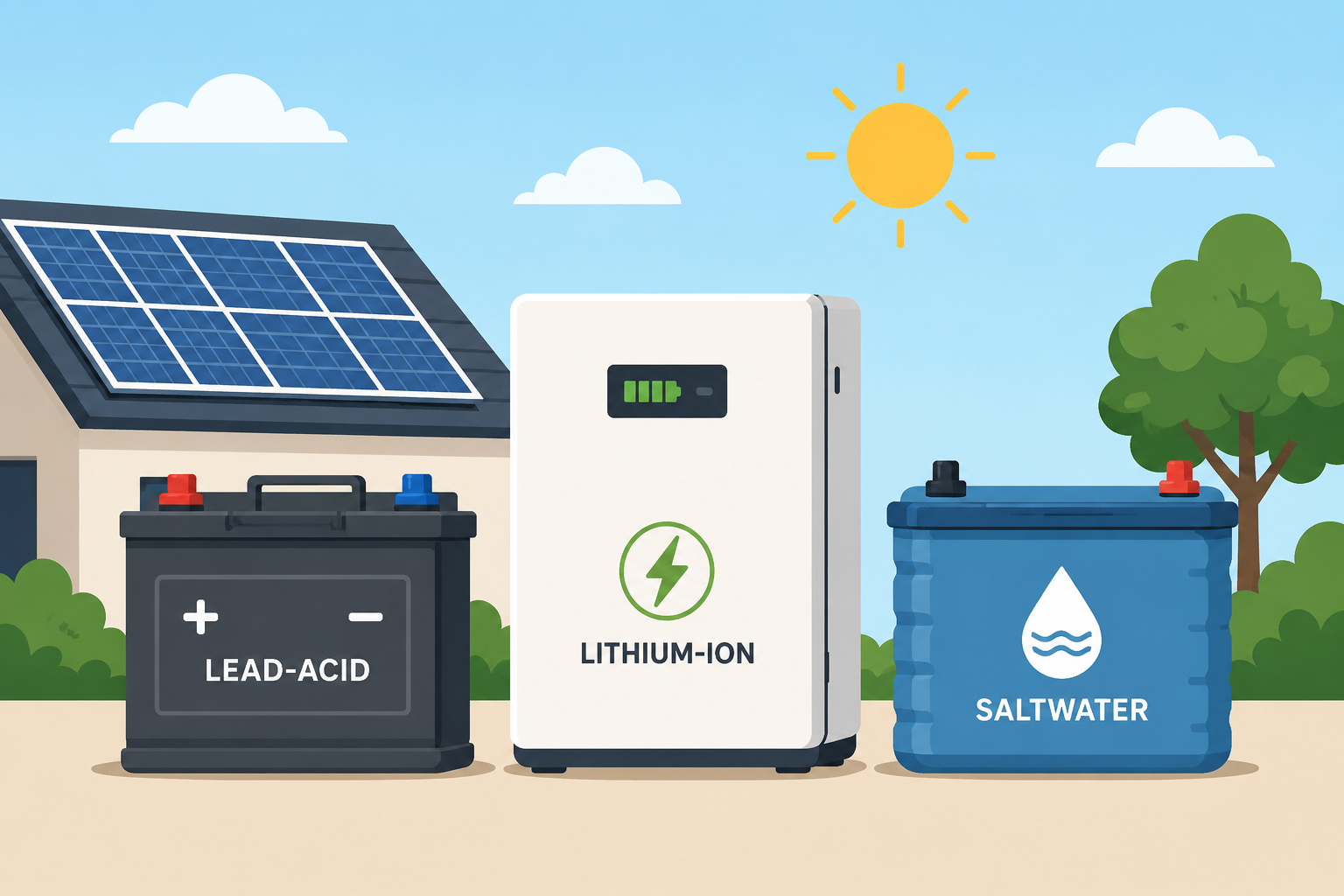
Installing a solar power system is one of the smartest ways to reduce electricity costs and gain greater energy independence. However, your solar panels are only part of the equation. If you want to store excess energy for use at night, during power outages, or on cloudy days, choosing the right solar battery is just as important.
Today, homeowners have several battery technologies to choose from, each offering unique advantages, limitations, and price points. Understanding the differences between lithium-ion, lead-acid, and saltwater batteries will help you select a solution that matches your energy needs, budget, and long-term goals.
In this guide, we’ll compare the most common solar battery types, explain how they work, discuss their pros and cons, and help you determine which option delivers the best value for your home.
Why Solar Batteries Matter
Solar panels generate electricity whenever the sun is shining. Without a battery, any unused electricity is typically sent back to the utility grid through net energy metering. While this can lower your electric bill, it doesn’t provide backup power during outages.
Solar batteries solve this problem by storing excess electricity generated during the day so you can use it later when solar production decreases or demand increases.
Adding battery storage allows homeowners to:
- Increase energy independence
- Reduce reliance on the utility grid
- Maintain electricity during blackouts
- Maximize self-consumption of solar energy
- Potentially lower long-term electricity costs
Before investing in battery storage, it’s also worth understanding whether solar batteries are worth the investment for your specific energy usage and financial goals.
Key Factors to Consider When Choosing a Solar Battery
Not every battery performs the same. Comparing a few important specifications can make choosing much easier.
Capacity
Battery capacity measures how much electricity a battery can store, typically expressed in kilowatt-hours (kWh). Larger homes or households with higher electricity usage generally require larger storage capacities.
Depth of Discharge (DoD)
Depth of Discharge indicates how much of the battery’s stored energy can safely be used.
Battery Type / Typical DoD
- Lead-acid: 50%
- Lithium-ion: 80–100%
- Saltwater: Around 90%
Higher DoD means more usable energy from the same battery size.
Lifespan
Battery lifespan is commonly measured in charging cycles.
More charging cycles mean:
- Longer usable life
- Lower replacement costs
- Better long-term value
Efficiency
Efficiency determines how much stored energy you actually get back after charging.
Modern lithium-ion batteries usually achieve efficiencies above 90%, making them among the most efficient storage options available.
Maintenance
Some batteries require periodic inspections, water refills, or ventilation, while others operate virtually maintenance-free.
Lead-Acid Batteries
Lead-acid batteries have powered electrical systems for well over a century and remain one of the most affordable options for residential solar storage.
Their lower upfront cost makes them attractive for homeowners working with limited budgets or building basic off-grid systems.
Advantages of Lead-Acid Batteries
- Lowest initial purchase price
- Proven, reliable technology
- Widely available
- Suitable for backup applications
Drawbacks
Although affordable, lead-acid batteries have several disadvantages.
They generally offer:
- Shorter lifespan
- Lower energy efficiency
- Higher maintenance requirements
- Lower depth of discharge
- More frequent replacement
Because they typically support only about a 50% depth of discharge, homeowners often need additional batteries to meet their storage requirements.
Routine maintenance may also include checking electrolyte levels, cleaning terminals, and ensuring proper ventilation.
Lead-acid batteries remain a practical option for users prioritizing affordability over long-term performance.
Lithium-Ion Batteries
Lithium-ion batteries have become the industry standard for modern residential solar systems.
Their excellent efficiency, compact design, and long service life make them the preferred choice for most homeowners.
Advantages of Lithium-Ion Batteries
Compared to lead-acid batteries, lithium-ion systems offer:
- Higher energy density
- Longer lifespan
- Faster charging
- Greater usable capacity
- Little to no maintenance
- Lightweight construction
Many lithium-ion batteries support an 80% to 100% depth of discharge, allowing homeowners to access much more of the stored energy.
Although the upfront investment is higher, lower maintenance costs and longer operating life often make lithium-ion batteries the most cost-effective solution over time.
Best For
Lithium-ion batteries are ideal for:
- Grid-tied solar systems
- Hybrid solar installations
- Whole-home backup
- Homeowners seeking maximum long-term savings
Saltwater Batteries
Saltwater batteries represent one of the newest developments in residential energy storage.
Instead of relying on heavy metals, they use saltwater electrolytes, making them one of the safest and most environmentally friendly battery technologies currently available.
Advantages of Saltwater Batteries
Key benefits include:
- Non-toxic materials
- No fire risk
- Fully recyclable components
- Long operating lifespan
- Environmentally friendly design
These characteristics make saltwater batteries particularly appealing to homeowners focused on sustainability and reducing environmental impact.
Drawbacks
Despite their environmental advantages, saltwater batteries still face several limitations.
They generally have:
- Higher manufacturing costs
- Larger physical size
- Lower energy density
- Limited market availability
Because they require more installation space to store the same amount of electricity as lithium-ion batteries, they may not be practical for every home.
As production scales and technology advances, these batteries may become more competitive in the future.
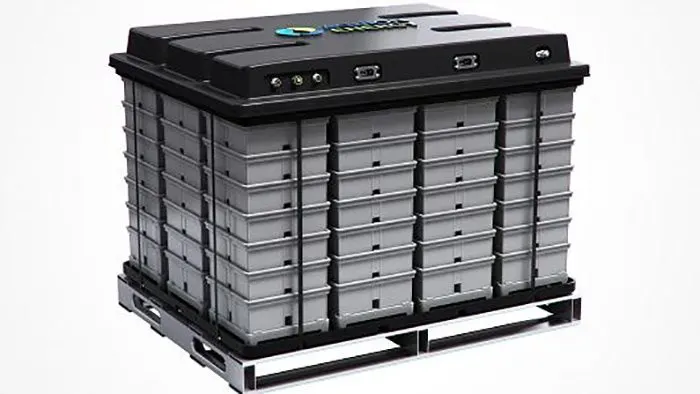
Solar Battery Comparison
Lead-Acid Batteries
- Upfront Cost: Low
- Lifespan: Short
- Maintenance: High
- Depth of Discharge: Around 50%
- Efficiency: Moderate
- Safety: Moderate
- Environmental Impact: Moderate
- Space Required: Moderate
Lithium-Ion Batteries
- Upfront Cost: High
- Lifespan: Long
- Maintenance: Minimal
- Depth of Discharge: 80–100%
- Efficiency: High
- Safety: High
- Environmental Impact: Moderate
- Space Required: Low
Saltwater Batteries
- Upfront Cost: Moderate to High
- Lifespan: Long
- Maintenance: Minimal
- Depth of Discharge: Around 90%
- Efficiency: Moderate
- Safety: Very High
- Environmental Impact: Excellent
- Space Required: High
Which Solar Battery Is Best?
There isn’t a single battery that’s best for every homeowner. The ideal choice depends on your priorities.
Choose Lead-Acid If
Lead-acid batteries make sense if you:
- Have a tight budget
- Need temporary energy storage
- Don’t mind routine maintenance
- Operate a simple off-grid system
Choose Lithium-Ion If
Lithium-ion batteries are the best choice if you:
- Want the longest lifespan
- Prefer maintenance-free operation
- Need maximum efficiency
- Have limited installation space
- Want the best long-term return on investment
Choose Saltwater If
Saltwater batteries may be right if you:
- Prioritize sustainability
- Want non-toxic battery technology
- Have enough installation space
- Value environmental responsibility over compact size
Understanding the Total Cost of Solar Batteries
Battery prices are only one part of your overall investment.
Installation costs can vary depending on:
- Battery capacity
- Backup power requirements
- Existing electrical system
- Inverter compatibility
- Labor costs
- Local permitting
It’s also important to consider how solar panel installation costs affect your total investment when planning a complete home solar system.
Looking beyond upfront pricing provides a more accurate picture of your long-term savings.
Should You Install Battery Storage With Your Solar Panels?
Battery storage isn’t mandatory for every solar installation.
If your utility company offers favorable net energy metering, sending excess electricity back to the grid may already provide significant savings.
However, batteries become increasingly valuable if you:
- Experience frequent power outages
- Want greater energy independence
- Live in areas with high electricity prices
- Plan to install an off-grid system
- Need reliable emergency backup power
A professional solar assessment can determine the right battery size and system configuration for your home.
Many homeowners begin by exploring complete residential solar solutions before deciding which battery technology best fits their energy goals.
Get a Professional Solar Assessment
Choosing the right battery involves more than comparing specifications.
A professional solar audit evaluates your home’s energy consumption, roof conditions, sunlight exposure, and backup power needs to recommend the most efficient storage solution.
With expert guidance, you’ll know:
- Whether your home is solar-ready
- The ideal battery size
- Expected electricity savings
- Available net metering opportunities
- Total installation costs
- Estimated return on investment
Making informed decisions today can help you maximize the value of your solar investment for years to come.
Frequently Asked Questions
What is the best type of solar battery for homes?
Lithium-ion batteries are generally considered the best option because they offer excellent efficiency, long lifespans, minimal maintenance, and high usable capacity.
How long do solar batteries last?
The lifespan depends on battery type. Lead-acid batteries typically last several years, while lithium-ion and saltwater batteries can last significantly longer with proper use and maintenance.
Are saltwater batteries better than lithium-ion batteries?
Saltwater batteries are safer and more environmentally friendly, but lithium-ion batteries currently provide better energy density, smaller size, and broader availability.
Do all solar systems need batteries?
No. Grid-tied systems can operate without batteries if local net metering programs are available. However, batteries provide backup power and increase energy independence.
Can I add a battery to my existing solar system?
In many cases, yes. Existing solar systems can often be upgraded with compatible battery storage, though equipment compatibility should be evaluated by a professional installer.
How do I choose the right battery size?
Battery size depends on your daily electricity consumption, backup power requirements, and budget. A professional solar assessment can recommend the appropriate storage capacity.