

Technical SEO Roadmap for AEO & GEO: A Practical Guide
August 10, 2026
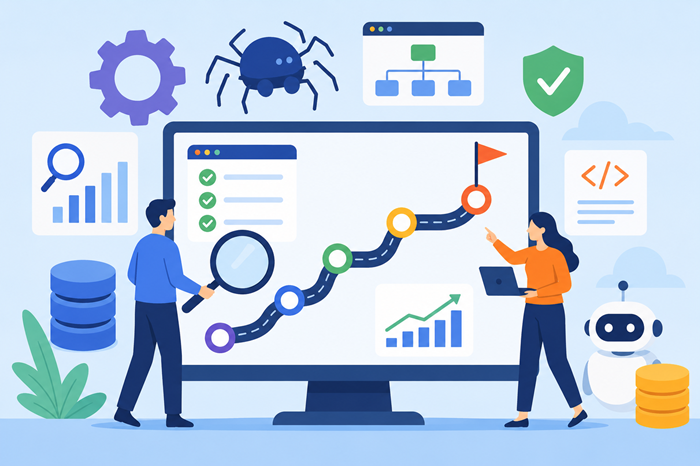
Search is changing quickly. Websites are no longer built only for traditional search engines; they also need to be understood by AI systems, answer engines, and generative search platforms. That makes a clear technical SEO roadmap essential for websites that want strong visibility across Google and emerging AI-driven search experiences.
A modern technical SEO roadmap connects technical health, structured information, crawlability, schema, and machine-readable content so search systems can discover, interpret, and confidently use your pages.
Key Takeaway
- Build a technical SEO roadmap around crawling, indexing, structured data, and machine readability.
- Use schema markup to give search engines and AI systems clearer context about your content.
- Align technical improvements with AEO and GEO so content can be discovered and cited.
- Monitor performance continuously instead of treating technical optimization as a one-time project.
Why a Technical SEO Roadmap Matters for Modern Search
Traditional SEO focused heavily on rankings and organic traffic. Those goals still matter, but search behavior has expanded. Users increasingly expect direct answers, summaries, recommendations, and conversational results.
This shift means websites need more than useful content. Their technical foundations must help machines understand what each page represents, how different pieces of information relate to one another, and whether the content can be trusted.
A well-planned technical SEO roadmap creates that foundation. It provides a practical sequence for identifying technical barriers, improving website architecture, strengthening structured data, and making important information easier for machines to process.
For businesses competing in crowded search results, this approach can also support broader digital marketing service strategies by connecting organic visibility with content, user experience, and search demand.
Start With Website Discovery and Indexing
Before optimizing content for AI search, make sure search engines can find and process your important pages.
A website can contain excellent information and still perform poorly if essential pages are blocked, poorly linked, duplicated, or excluded from indexing. The first stage of a technical SEO roadmap should therefore examine how search crawlers move through the website.
Check Crawl Paths
Review robots.txt, XML sitemaps, internal links, redirects, canonical tags, and status codes. These elements help guide crawlers toward the pages that matter most.
Large websites require additional attention because thousands or millions of URLs can create unnecessary crawling patterns. Faceted navigation, outdated URLs, duplicate pages, parameter variations, and weak internal linking can all make discovery less efficient.
If your website is large or complex, understanding how to handle a technical seo audit for large websites can help establish a more systematic auditing process.
Improve Internal Linking
Internal links are also important for machine understanding. They establish relationships between related pages and help distribute authority throughout a site.
Instead of adding links randomly, organize them around meaningful topic relationships. A service page should connect to relevant supporting resources, while informational articles should naturally point toward deeper pages where appropriate.
This creates a clearer information architecture and gives search systems additional context about your website.
Make Content Easier for Machines to Understand
Search engines and AI systems need to interpret information, not simply locate words on a page. This makes semantic structure an important part of a technical SEO roadmap.
Clear headings, descriptive page titles, logical content sections, consistent terminology, and well-organized navigation all contribute to better machine interpretation.
What Is AEO?
Answer Engine Optimization focuses on making content useful and understandable for systems that provide direct answers to user questions.
Instead of optimizing only for a traditional list of blue links, AEO considers how content can become a reliable source for answer-focused search experiences.
A practical answer engine optimization (AEO) strategy should therefore work alongside strong technical foundations. If an answer engine cannot efficiently access, interpret, or identify your content, even highly informative material may struggle to gain visibility.
Connect Technical Foundations With GEO
Generative search introduces another layer. AI-powered search systems may combine information from multiple sources to generate responses rather than simply displaying individual rankings.
This makes GEO increasingly relevant for businesses that want their content to appear within AI-generated answers.
A strong technical SEO roadmap should support this goal by ensuring important information is accessible, structured, consistent, and clearly connected across the website.
GEO vs SEO: What Changes?
Traditional SEO generally focuses on improving visibility in search results. Generative optimization considers how information may be selected, interpreted, summarized, and cited by AI systems.
The relationship between the two is not necessarily competitive. A technically sound website can support both objectives.
The GEO vs SEO comparison is useful when deciding how traditional search optimization and AI-focused visibility should work together.
Use Structured Data Strategically
Structured data helps machines understand the meaning behind information presented on a webpage. It can identify entities, relationships, products, organizations, events, articles, and other content types in a standardized format.
Schema markup should not be treated as a shortcut to rankings. Instead, it should accurately describe information that already exists on the page.
Build a Consistent Data Layer
A strong technical SEO roadmap should identify which structured data types are appropriate for each important page template.
For example, an organization page may need organization information, while an article can use article-related structured data. Product pages, local business pages, events, and other content types may require different implementations.
Accuracy matters. Structured data should match visible page information and remain updated when the underlying content changes.
Improve Mobile Performance and Core Web Vitals
Technical improvements should also consider how users experience the website.
Slow-loading pages, unstable layouts, difficult navigation, and poor mobile interactions can weaken both usability and search performance. A technical SEO roadmap should therefore include performance monitoring rather than treating speed as a separate project.
Focus on factors such as:
- Page loading performance
- Layout stability
- Interaction responsiveness
- Mobile usability
- Image optimization
- JavaScript efficiency
- Server response times
A practical core web vitals checklist for better mobile-first seo can help organize these checks and identify areas that need improvement.
Understand Crawlability Before Scaling Content
What is crawlability? It refers to how easily search engine crawlers can access and navigate the pages of a website.
Strong crawlability becomes especially important when websites publish content frequently or have complicated architectures.
A technical SEO roadmap should review crawl patterns before a business scales its publishing strategy. Adding hundreds of pages to an inefficient architecture can increase technical problems instead of increasing organic visibility.
Common Crawl Problems
Some of the most common issues include:
- Broken internal links
- Excessive redirects
- Orphan pages
- Duplicate URLs
- Incorrect canonicalization
- Blocked resources
- Poor sitemap management
- Unnecessary URL parameters
- Weak internal linking
Fixing these issues can make a website easier for search engines to navigate and can create a cleaner foundation for future content.
Create Machine-Readable Information
Machine-readable data is becoming increasingly important as search evolves beyond traditional keyword matching.
Businesses should make important facts easy to identify and consistent across their website. This may include business names, locations, services, product details, author information, dates, pricing, and other relevant attributes.
A technical SEO roadmap should document these important entities and determine where they appear across the website.
Consistency is particularly important when multiple pages discuss the same organization, service, or topic. Conflicting information can make interpretation more difficult.
Prioritize Technical SEO Services by Business Impact
Not every technical issue deserves immediate attention. A long audit report can contain hundreds of recommendations, but fixing everything simultaneously is rarely practical.
A better technical SEO roadmap prioritizes problems according to their impact on crawling, indexing, visibility, conversions, and user experience.
A Simple Priority Framework
High priority: Issues preventing important pages from being crawled or indexed.
Medium priority: Problems affecting performance, internal linking, structured data, or page experience.
Lower priority: Minor technical improvements with limited measurable business impact.
This approach makes technical seo services more actionable because resources can be directed toward problems that influence meaningful outcomes.
Build a Repeatable Technical SEO Roadmap
A successful technical SEO roadmap should not end after the initial audit. Websites change constantly as developers publish updates, marketing teams create pages, and businesses add new products or services.
Create a recurring process that includes:
- Technical crawling and indexing checks
- Sitemap and robots.txt reviews
- Internal linking analysis
- Structured data validation
- Mobile performance monitoring
- Redirect and canonical checks
- AI-search visibility monitoring
- Content and entity consistency reviews
Documenting these checks makes technical optimization easier to maintain across teams.
When to Bring in an SEO Agency
Some websites can manage basic technical improvements internally, but complex sites may benefit from specialist support.
If your website has thousands of pages, multiple templates, international versions, JavaScript-heavy functionality, or significant indexing problems, an experienced team can help identify issues that are difficult to spot manually.
Businesses considering external support can review what to consider when you hire an seo agency in the United States before choosing a provider.
The goal should not simply be to outsource technical tasks. The right partner should help connect technical work with measurable business objectives.
How to Measure Progress
A technical SEO roadmap should include clear measurements so improvements can be evaluated over time.
Useful indicators include indexed pages, crawl errors, organic traffic, impressions, ranking visibility, page performance, structured-data validity, and conversions from organic search.
For AEO and GEO initiatives, additional qualitative signals may be useful, such as whether important pages are being surfaced in answer-focused results or referenced by AI-generated responses.
Avoid judging success by a single metric. Technical improvements often create the foundation for better visibility rather than producing an immediate ranking increase.
The Future of Technical Search Optimization
Search will continue moving toward systems that understand entities, context, relationships, and intent.
That does not make traditional optimization irrelevant. Instead, it makes technical foundations more important because websites must communicate effectively with several types of search systems.
A forward-looking technical SEO roadmap combines clean architecture, accessible content, accurate structured information, strong performance, and clear semantic relationships.
Businesses that build these foundations now will be better positioned as search continues to evolve from simple keyword retrieval toward increasingly intelligent information discovery.
Frequently Asked Questions
1. Why is a Technical SEO Roadmap important?
It provides a structured plan for improving crawling, indexing, structured data, performance, and machine understanding.
2. How does structured data support AI search?
It gives search systems standardized information that can clarify entities, relationships, and content meaning.
3. Can AEO and GEO work with traditional SEO?
Yes, technical and content improvements can support traditional rankings as well as answer and generative search visibility.
4. How often should a technical roadmap be reviewed?
Review major technical elements regularly and perform deeper audits whenever significant website changes occur.
5. Does technical optimization guarantee AI citations?
No, but strong accessibility, structured information, authoritative content, and clear context can improve the chances of being understood and referenced.