

Google Business Profile Rules for Prohibited Products
May 25, 2026
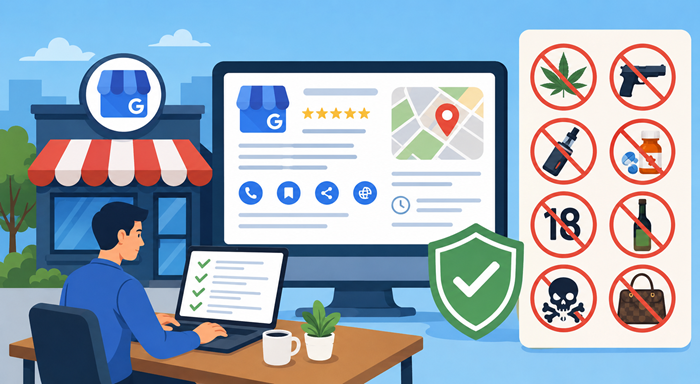
If your business relies on local visibility, your Google listing can either bring in steady traffic or create serious problems when it violates platform policies. One of the most common reasons listings get suspended is promoting restricted or banned products inside a business profile.
Many business owners unknowingly add prohibited inventory, misleading categories, or restricted content that conflicts with Google’s guidelines. The result can be lost rankings, reduced visibility, or even a suspended profile that takes weeks to recover.
This guide explains which products are prohibited on Google Business Profile, why the rules matter, and how businesses can stay compliant while still improving local visibility online.
Why Google Restricts Certain Products on Business Profiles
Google wants business listings to provide safe, trustworthy, and accurate information for users. Since millions of people rely on business listings to make purchasing decisions, the platform actively monitors industries that may involve fraud, dangerous products, or illegal activity.
A business profile that promotes restricted products can damage user trust and violate local regulations. That’s why Google removes or suspends listings that fail to follow its policies.
For companies investing in local seo, understanding these restrictions is just as important as optimizing categories or reviews.
What Counts as a Prohibited Product?
A prohibited product is any item, service, or promotional content that violates Google’s Business Profile policies or regional laws.
These restrictions can apply to:
- Product listings
- Photos
- Descriptions
- Posts
- Reviews
- Business names
- Service menus
Even a single policy violation can trigger moderation. Businesses managing multiple service regions should also understand the difference between gbp service areas vs product availability, especially when defining what they offer versus where they operate.
Categories of Prohibited Products on Google Business Profile
Illegal Drugs and Drug-Related Products
Google does not allow businesses to promote illegal drugs or substances connected to recreational drug use.
This includes:
- Cocaine
- Heroin
- Methamphetamine
- Drug paraphernalia
- Unlicensed cannabis products in restricted regions
Even businesses operating legally under local laws may face restrictions depending on their country or state regulations.
Counterfeit Goods
Businesses cannot advertise fake or imitation products pretending to be legitimate brands.
Examples include:
- Replica designer bags
- Fake electronics
- Counterfeit luxury watches
- Unauthorized branded merchandise
Google treats counterfeit promotion seriously because it creates legal and consumer protection concerns.
Weapons and Explosives
Listings promoting certain dangerous products may be restricted or removed.
These commonly include:
- Firearms
- Ammunition
- Explosives
- Bomb-making materials
- Illegal weapon accessories
In some regions, licensed firearm dealers may have limited visibility, but policy compliance is extremely strict.
Tobacco and Nicotine Products
Google heavily regulates nicotine-related businesses.
Restricted items may include:
- Cigarettes
- Vape products
- E-cigarettes
- Tobacco accessories
Policies can vary by country, but businesses should avoid promotional claims that encourage tobacco consumption.
Adult Products and Services
Businesses involving explicit sexual content may face visibility limitations or suspension.
This may apply to:
- Adult entertainment
- Explicit products
- Sexual services
- Graphic imagery
Even suggestive content in uploaded images can trigger moderation.
Dangerous or Harmful Products
Google restricts products that may cause physical harm or encourage dangerous activity.
Examples include:
- Toxic chemicals
- Unsafe supplements
- Hazardous materials
- Certain medical products without authorization
Businesses in health-related industries should ensure all claims remain factual and compliant.
Misleading Financial Services
Some financial industries receive heightened scrutiny because of fraud risks.
This can include:
- Payday loan scams
- Fake investment opportunities
- Misleading cryptocurrency schemes
- Fraudulent credit repair services
Transparency matters heavily for businesses operating in finance.
Misrepresentation Can Also Trigger Suspensions
Sometimes the issue is not the product itself but how the business presents it.
Google may penalize listings that:
- Use misleading product descriptions
- Add fake locations
- Stuff keywords into business names
- Misrepresent licensing information
This is where understanding e-e-a-t in SEO becomes valuable because trust and credibility now influence both visibility and moderation standards.
How Prohibited Products Affect Local Rankings
Violating Google policies does more than risk suspension. It can quietly damage overall visibility.
Businesses may experience:
- Lower local rankings
- Reduced map visibility
- Fewer calls and website visits
- Loss of customer trust
- Removal from search results
Google continuously evaluates listing quality as part of broader local seo ranking factors that influence map pack performance.
Common Mistakes Businesses Make
Uploading Non-Compliant Images
Many businesses accidentally violate policies through photos rather than written content.
Common examples include:
- Images of restricted products
- Before-and-after medical claims
- Explicit visuals
- Trademark misuse
Always review images before publishing.
Using the Wrong Business Category
Choosing inaccurate categories can confuse Google and increase manual reviews.
For example:
- Listing a smoke shop as a convenience store
- Categorizing a financial consultancy incorrectly
- Using medical categories without proper credentials
Accurate categorization supports better visibility and policy compliance.
Over-Optimizing Product Listings
Some businesses aggressively add keywords to product titles and descriptions.
This often leads to spam signals rather than improved rankings.
Natural, customer-focused descriptions work better than keyword-heavy content.
Safe Ways to Promote Your Business Instead
Instead of pushing restricted products directly, focus on building authority and trust through compliant optimization.
Highlight Services Instead of Restricted Inventory
Businesses in regulated industries should focus on:
- Professional expertise
- Customer support
- Licensed services
- Educational content
- Safety standards
This helps maintain visibility without triggering moderation.
Keep Business Information Accurate
Consistency matters across:
- Business name
- Address
- Phone number
- Categories
- Hours
- Website details
Google rewards accurate listings because they improve user experience.
The Role of Google Business Profile Optimization

Strong compliance alone is not enough. Businesses still need proper optimization to compete locally.
A complete google business profile should include:
- Accurate categories
- Updated business hours
- High-quality photos
- Customer reviews
- Relevant service details
Consistent google business profile optimization improves trust signals while reducing policy risks.
Why Google Updates These Policies Frequently
Google adjusts policies regularly to respond to:
- Consumer safety concerns
- Legal changes
- Scam prevention
- Industry abuse
- Regional regulations
Businesses should monitor google business profile updates so they can adapt quickly and avoid sudden suspensions.
How Local Businesses Can Stay Compliant
Audit Your Profile Regularly
Review every part of your listing monthly, including:
- Photos
- Products
- Services
- Posts
- Categories
- Descriptions
Small violations often go unnoticed until a suspension occurs.
Train Staff Managing Your Listing
If multiple employees manage the profile, establish clear publishing guidelines.
One incorrect upload can create unnecessary risk.
Avoid Automated Spam Tactics
Automated posting tools and mass-generated content often create compliance issues.
Google prefers authentic, human-focused business information.
Local Visibility Still Depends on Relevance
Even with strict policies, businesses can still build strong local visibility by focusing on relevance and customer experience.
For example, businesses targeting competitive geographic searches should understand how near me searches influence local intent and ranking behavior.
When Businesses Should Seek Professional Help
Many companies struggle to balance optimization with compliance, especially in regulated industries.
Working with a trusted local seo agency can help businesses:
- Maintain policy compliance
- Improve local rankings
- Recover suspended listings
- Optimize map visibility
- Build long-term authority
This is especially useful for businesses operating in highly competitive markets.
Understanding the Cost of Compliance and Optimization
Business owners often underestimate the work required to maintain a high-performing local listing.
Factors affecting local seo cost usually include:
- Industry competition
- Listing management
- Review strategy
- Content optimization
- Technical cleanup
- Suspension recovery
Businesses comparing service options can better understand pricing expectations by reviewing this guide on local seo cost.
Why Trust Matters More Than Ever
Google increasingly prioritizes trust, transparency, and authenticity in local search results.
Businesses that follow policies carefully tend to achieve:
- More stable rankings
- Better user engagement
- Higher conversion rates
- Stronger review performance
- Long-term visibility
Meanwhile, shortcuts often create short-lived gains followed by penalties or suspensions.
How Top Businesses Stay Competitive
Many of the top local seo companies focus heavily on compliance because sustainable rankings depend on long-term credibility.
The most successful businesses prioritize:
- Accurate listings
- Helpful content
- Real customer reviews
- Consistent updates
- Transparent communication
These strategies create durable local authority rather than temporary ranking spikes.
Practical Local Business SEO Tips for Safer Growth
Businesses can improve visibility while staying compliant by following a few proven practices:
- Keep all listing information accurate
- Respond professionally to reviews
- Upload original photos only
- Avoid exaggerated claims
- Monitor profile edits regularly
- Publish helpful updates instead of promotional spam
Simple, consistent improvements usually outperform aggressive tactics.
These kinds of local business seo tips help businesses build sustainable local growth without risking policy violations.
Conclusion
Google Business Profile policies exist to protect users and maintain trust across local search results. Businesses promoting prohibited products or misleading content risk losing valuable visibility, customer trust, and ranking stability.
The safest long-term strategy is balancing compliance with smart optimization. Accurate business information, trustworthy content, and consistent updates create stronger local visibility without triggering unnecessary penalties.
Businesses that stay proactive with policy changes and profile management position themselves for more reliable growth in local search.
FAQs
What products are prohibited on Google Business Profile?
Illegal drugs, counterfeit goods, weapons, explicit products, and misleading financial services are commonly restricted.
Can Google suspend a listing for prohibited products?
Yes, violating product policies can lead to listing suspension or removal from search results.
Are vape shops allowed on Google Business Profile?
Some regions allow limited visibility, but tobacco and nicotine businesses face strict restrictions.
Do prohibited products affect local rankings?
Yes, policy violations can reduce visibility and weaken local search performance.
How often should businesses audit their profile?
A monthly review helps catch compliance issues before they trigger penalties.