

Why Organic Traffic Drops After Google Updates
May 27, 2026
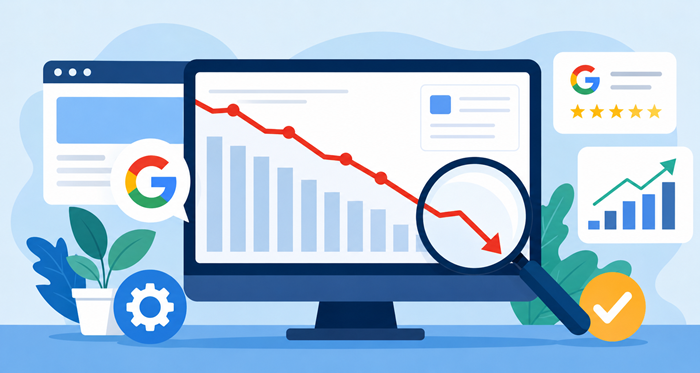
If your website traffic suddenly tanked overnight, you’re not alone. Every major Google update reshapes search visibility, and businesses across industries often feel the impact immediately. One day your pages rank steadily, and the next, impressions, clicks, and conversions start slipping without warning.
A sudden decline in traffic can be frustrating, especially when your rankings seemed stable before. In many cases, the cause is tied directly to a recent search engine algorithm update that changed how Google evaluates content quality, relevance, authority, or user experience.
The good news is that a traffic drop does not automatically mean your site is penalized. Most ranking fluctuations happen because Google recalibrates what it believes users want to see. Understanding what changed is the first step toward recovery.
In this guide, we’ll break down the most common reasons organic traffic drops after a Google update, how to diagnose the issue correctly, and what actions actually help restore performance over time.
Understanding Why Google Algorithm Updates Matter
Google releases thousands of small ranking adjustments every year, but major core updates can significantly impact website visibility. These updates are designed to improve search quality by rewarding websites that provide useful, trustworthy, and user-focused content.
That means sites relying on outdated SEO tactics, thin content, weak authority, or poor usability may lose visibility quickly.
At the same time, websites with strong expertise and valuable information often gain traffic after updates settle.
This is why businesses that invest consistently in digital marketing services typically recover faster and maintain stronger long-term rankings.
Common Reasons Organic Traffic Suddenly Drops
A traffic decline rarely happens for just one reason. Usually, multiple issues combine to weaken search visibility after an algorithm update.
Thin or Outdated Content
Google increasingly prioritizes content that demonstrates expertise and solves real user problems.
Pages that are short, repetitive, outdated, or written primarily for keywords often lose rankings after updates. If your articles haven’t been refreshed in years, competitors with newer and more complete information may now outrank you.
One of the smartest recovery steps is to update service pages for better SEO by improving depth, accuracy, and topical relevance.
Declining Content Relevance
Search intent changes constantly. A page that ranked well two years ago may no longer match what users expect today.
For example, informational searches now often favor detailed guides, examples, FAQs, videos, and expert-backed insights rather than basic promotional pages.
Google wants pages that genuinely help users complete their search journey.
Weak Trust Signals
Modern Google updates heavily evaluate trustworthiness and authority.
If your site lacks author credibility, quality backlinks, customer proof, business transparency, or reliable references, rankings can decline even if your content is technically optimized.
This is especially common in competitive industries where stronger brands continue building authority consistently.
Technical SEO Problems
Sometimes the issue has nothing to do with content quality.
Traffic can fall because of:
- Broken indexing
- Slow page speed
- Mobile usability issues
- Crawl errors
- Accidental noindex tags
- Duplicate pages
- JavaScript rendering problems
A technical audit should always be part of your investigation before assuming the update itself caused the issue.
Competitors Improved Faster
Google updates create ranking reshuffles. Sometimes your website didn’t get worse — other websites simply became better.
Competitors may have published fresher content, improved user experience, earned stronger backlinks, or expanded topical authority more aggressively than your business.
How to Confirm an Algorithm Update Impacted Your Site
Before making major changes, confirm whether your traffic drop aligns with a known Google update.
Check Traffic Timing
Use Google Analytics and Search Console to identify the exact date traffic started declining.
If the drop matches the timing of a confirmed Google core update, there’s a strong chance the ranking changes are algorithm-related.
Compare Rankings Across Pages
Look closely at which pages lost traffic.
- Did blog posts decline?
- Product pages?
- Service pages?
- Location pages?
This helps identify whether the problem is content quality, topical authority, or technical SEO.
Monitor Search Console Data
Search Console provides valuable clues.
Look for:
- Falling impressions
- Lower average ranking positions
- Declining click-through rates
- Indexed pages disappearing
- Mobile usability warnings
These signals help isolate the source of the problem.
What You Should Avoid After a Traffic Drop
Many businesses panic after seeing sudden ranking losses. Unfortunately, rushed reactions often make the situation worse.
Don’t Rewrite Everything Immediately
Completely rewriting high-performing pages without understanding the cause can destroy existing rankings further.
Focus on strategic improvements instead of drastic changes.
Don’t Stuff Keywords
Adding excessive keywords after a ranking drop rarely helps anymore.
Google’s systems are much better at understanding natural language and context. Over-optimization can actually hurt performance.
Don’t Buy Low-Quality Backlinks
Spammy link-building tactics may create temporary spikes, but they often lead to long-term instability.
Google updates increasingly target manipulative SEO behavior.
Don’t Ignore User Experience
Poor readability, intrusive popups, cluttered layouts, and slow-loading pages all affect rankings indirectly through user engagement signals.
How to Recover Lost Organic Traffic
Recovery usually takes time, but sustainable improvements can restore rankings gradually.
Improve Content Quality
Start by reviewing pages that lost the most traffic.
Ask:
- Does this page fully answer user intent?
- Is the information current?
- Does it offer unique value?
- Would users trust this content?
High-performing websites consistently create relevant content that aligns with user needs instead of simply targeting keywords.
Strengthen E-E-A-T Signals
Google emphasizes:
- Experience
- Expertise
- Authoritativeness
- Trustworthiness
Add:
- Author bios
- Real business information
- Customer testimonials
- Expert insights
- Case studies
- Credible citations
These signals help Google understand your legitimacy.
Refresh Existing Pages
Updating old content often works better than publishing endless new articles.
Focus on:
- Adding fresh statistics
- Improving readability
- Expanding sections
- Updating screenshots
- Fixing outdated advice
- Improving internal linking
Consistent content maintenance signals quality to Google over time.
Improve Site Performance
Technical SEO still matters.
Prioritize:
- Faster loading speeds
- Better mobile responsiveness
- Cleaner navigation
- Structured data
- Crawl optimization
- HTTPS security
Small technical improvements can produce measurable ranking gains.
Build Topical Authority
Google increasingly rewards websites that demonstrate deep expertise in a subject area.
Instead of publishing random articles, build clusters of related content around core business topics.
This creates stronger contextual relevance across your website.
Why Recovery Often Takes Longer Than Expected
One of the biggest misconceptions about Google updates is that rankings bounce back instantly after fixes are made.
In reality, recovery often happens gradually.
Google needs time to:
- Re-crawl pages
- Reassess content quality
- Evaluate user engagement
- Recalculate authority signals
Depending on competition and update severity, improvements may take weeks or even months.
Patience combined with consistent optimization usually produces better results than aggressive short-term tactics.
The Role of Content Strategy in Long-Term Stability
Websites that survive algorithm volatility typically follow a long-term publishing strategy rather than chasing quick ranking tricks.
Strong content strategies focus on:
- User intent
- Topical depth
- Clear site structure
- Trust-building
- Helpful information
- Consistent updates
This creates resilience during future updates.
Businesses that understand how higher rankings turn visibility into sales tend to prioritize sustainable growth instead of temporary ranking hacks.
When You Should Work With SEO Professionals
Sometimes traffic losses involve complex technical or strategic issues that require deeper analysis.
An experienced team can help identify:
- Hidden technical problems
- Content quality gaps
- Competitor advantages
- Link profile weaknesses
- Search intent mismatches
Working with a trusted seo agency can speed up diagnosis and recovery while preventing costly mistakes.
Professional guidance becomes especially valuable after major ranking volatility impacts revenue or lead generation.
How Modern SEO Has Changed After Recent Updates
Google’s ranking systems are more sophisticated than ever.
Today, successful search engine optimization depends less on isolated tactics and more on overall website quality.
Search engines now evaluate:
- User satisfaction
- Content usefulness
- Brand trust
- Expertise
- Website experience
- Content originality
This shift means businesses must focus on building genuinely valuable digital experiences instead of manipulating rankings.
As competition increases, sustainable seo organic traffic growth comes from consistency, trust, and relevance.
Why User Intent Matters More Than Keywords Alone
Many websites still focus too heavily on keyword placement while ignoring search intent.
Google has evolved beyond exact-match optimization.
A successful seo organic traffic strategy now depends on understanding:
- What users actually want
- Why they search
- What format they prefer
- What problems they need solved
Content that satisfies user intent thoroughly tends to perform better during algorithm updates.
Integrating SEO With Broader Marketing Efforts
SEO no longer operates in isolation.
Strong rankings are increasingly supported by:
- Brand authority
- Social proof
- Content marketing
- Customer engagement
- Online reputation
This is why businesses often combine seo and digital marketing services to create stronger visibility across multiple channels.
A well-rounded digital presence reinforces trust signals that support long-term search performance.
Final Thoughts
A sudden traffic drop after a Google update can feel alarming, but it’s often an opportunity to improve your website’s overall quality and competitiveness.
Instead of reacting emotionally, focus on diagnosing the issue carefully and making strategic improvements that align with Google’s long-term direction.
The websites that recover most successfully are usually the ones that:
- Prioritize users first
- Maintain high-quality content
- Improve technical performance
- Build trust consistently
- Adapt to changing search behavior
Google updates will continue evolving, but businesses committed to delivering real value will always have the strongest chance of long-term visibility and growth.
FAQs
Why did my website traffic suddenly drop overnight?
A major Google algorithm update, technical issue, or ranking shift may have impacted your visibility.
How long does it take to recover from a Google update?
Recovery can take several weeks or months depending on competition and site improvements.
Can outdated content hurt rankings after an update?
Yes, stale or low-quality content often loses visibility after core updates.
Should I delete pages that lost rankings?
Not immediately; improving and updating pages is usually more effective.
Do Google updates affect all websites equally?
No, updates impact websites differently based on quality, authority, and relevance.