

The Smart Guide to B2B Leads Through Social Media
May 18, 2026
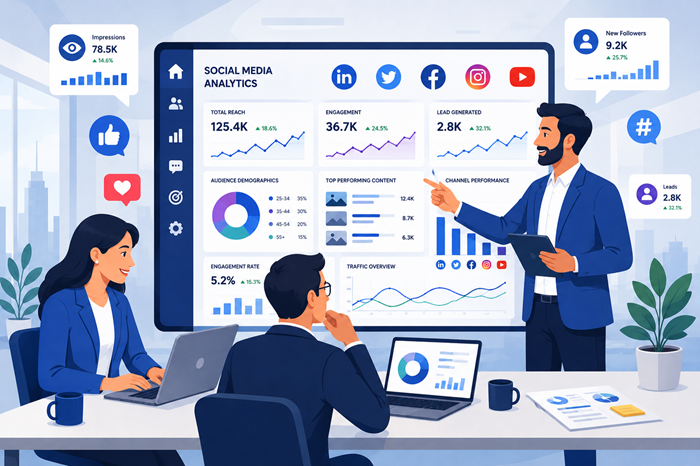
Social platforms are no longer just branding channels. For companies targeting decision-makers, they’ve become one of the most reliable ways to attract qualified prospects, build authority, and create long-term customer relationships. The challenge is that most businesses still approach social media with outdated tactics that generate clicks instead of real conversations.
If your goal is to consistently generate better leads, improve visibility, and shorten the sales cycle, your social strategy needs to be intentional. This guide breaks down the modern approach to attracting high-quality prospects through content, targeting, and engagement that actually move people toward a buying decision.
Why Social Media Matters More in B2B Today
Business buyers now spend a significant amount of time researching solutions before ever contacting a company. They compare providers, watch educational videos, read thought leadership posts, and evaluate brand credibility directly through social platforms.
That shift has completely changed how lead generation works.
Instead of relying only on cold outreach or trade shows, companies can now position themselves in front of decision-makers consistently through valuable content and strategic campaigns. A well-planned social presence helps businesses build trust long before the first sales call happens.
Many brands struggling with the online invisibility of business often overlook how important consistent visibility is across professional and social platforms. If prospects never see your expertise, they rarely consider your company when purchase decisions arise.
What Makes a High-Quality Lead?
Not every lead is worth pursuing. Strong lead generation focuses on attracting people who already match your ideal customer profile.
A high-quality lead usually has:
- A real business need
- Decision-making influence
- Budget potential
- Interest in solving a specific problem
- Intent to act within a reasonable timeline
The goal is not simply to increase numbers. It’s to attract prospects who are more likely to convert into long-term clients.
That’s where strategic content and audience targeting become critical.
Build a Social Strategy Around Buyer Intent
The biggest mistake companies make is posting random updates without understanding what potential clients actually need at different stages of the buying journey.
An effective strategy aligns content with intent.
Awareness Stage Content
At this stage, buyers are identifying problems. Educational content performs best here.
Examples include:
- Industry trends
- Common mistakes
- Short explainer videos
- Research insights
- Practical frameworks
This type of content introduces your expertise without immediately pushing a sale.
Consideration Stage Content
Once prospects understand their problem, they begin evaluating solutions.
This is where you should publish:
- Case studies
- Process breakdowns
- Comparison guides
- Expert opinions
- Webinars
These formats help position your company as a trusted solution provider.
Decision Stage Content
Prospects close to converting need confidence.
Strong content for this stage includes:
- Client testimonials
- Performance results
- Detailed service explanations
- Consultation offers
- Strategic audits
The transition from education to conversion should feel natural, not aggressive.
Choose Platforms Based on Audience Behavior
Not every platform delivers equal value for every business model.
LinkedIn remains one of the strongest channels for professional lead generation. It’s especially effective for:
- SaaS companies
- Agencies
- Consultants
- Professional service providers
- Enterprise solutions
Decision-makers actively use LinkedIn to evaluate expertise and discover providers.
YouTube
Long-form educational content works extremely well for complex services. Tutorials, strategy explainers, and industry analysis videos can generate long-term organic traffic.
X and Industry Communities
For industries driven by trends, insights, or rapid discussions, short-form commentary and participation in niche conversations can increase authority quickly.
Instagram and Visual Platforms
Visual storytelling works particularly well for branding-heavy industries and companies with strong visual processes, company culture, or product demonstrations.
A strong social media marketing plan focuses less on being everywhere and more on being consistently valuable where your audience already spends time.
Create Content That Solves Real Problems
Content quality matters far more than publishing frequency.
The most effective brands create material that directly addresses business pain points instead of chasing viral trends.
Focus on Specific Challenges
Generic advice rarely generates qualified interest.
Instead of broad topics, focus on targeted issues like:
- Reducing customer acquisition costs
- Improving conversion rates
- Increasing retention
- Shortening sales cycles
- Improving lead quality
Specificity builds credibility.
Use Data and Experience
Real examples perform better than theory alone.
Share:
- Internal observations
- Campaign lessons
- Performance benchmarks
- Client wins
- Industry insights
Content backed by experience positions your company as a practitioner rather than just a commentator.
Use Paid Campaigns Strategically
Organic reach is valuable, but paid promotion helps accelerate visibility among highly targeted audiences.
A successful social media advertising approach focuses on precision rather than volume.
Target Job Roles and Intent
Platforms now allow highly detailed targeting based on:
- Job titles
- Industries
- Company size
- Interests
- Behavior patterns
This allows businesses to place highly relevant offers directly in front of decision-makers.
Promote Educational Assets
Rather than promoting direct sales pitches immediately, drive traffic toward:
- Guides
- Industry reports
- Workshops
- Case studies
- Free assessments
This creates lower-friction entry points that generate stronger engagement.
Retarget Interested Visitors
Most prospects do not convert during their first interaction.
Retargeting keeps your business visible after someone engages with your content or website.
Strong retargeting ad strategies help reconnect with people who already showed interest, making future conversion far more likely.
Retargeting campaigns work especially well for:
- Webinar attendees
- Website visitors
- Video viewers
- Lead magnet downloads
- Previous inquiries
Repeated exposure builds familiarity and trust.
Thought Leadership Builds Better Leads
Modern buyers prefer companies that demonstrate expertise openly.
That’s why thought leadership content has become a major driver of trust and inbound inquiries.
Share Clear Opinions
Strong perspectives help brands stand out.
Avoid overly cautious or vague content. Instead, explain:
- What works
- What no longer works
- Industry misconceptions
- Strategic shifts
- Emerging opportunities
Expert positioning attracts more serious buyers.
Encourage Team Visibility
Company leaders and specialists should actively participate in conversations.
Personal insights often outperform polished corporate messaging because they feel more authentic and relatable.
Use Video to Increase Engagement
Video content consistently earns higher engagement than text-only posts.
Short-form and long-form videos both play important roles in lead generation.
Educational Short Videos
Quick breakdowns help simplify complex topics and improve reach.
Examples include:
- One-minute strategy tips
- Common mistakes
- Quick tutorials
- Industry updates
Long-Form Deep Dives
Longer videos establish authority and keep prospects engaged longer.
Topics may include:
- Process walkthroughs
- Client success analysis
- Trend forecasts
- Framework explanations
Businesses investing in consistent video content often see stronger inbound inquiries over time.
Partner With Trusted Voices
Collaborations can significantly improve credibility and reach.
Strategic influencer marketing in the professional space doesn’t necessarily mean celebrity partnerships. It often involves:
- Industry experts
- Niche creators
- Consultants
- Analysts
- Podcast hosts
The goal is credibility within a relevant professional audience.
Align Marketing and Sales Teams
One of the biggest weaknesses in lead generation is disconnected communication between marketing and sales.
Marketing may generate interest while sales teams struggle to convert because expectations are misaligned.
To improve lead quality:
- Define ideal lead profiles together
- Share campaign feedback regularly
- Track content influence on conversions
- Review objections and questions from prospects
Alignment creates more efficient acquisition systems.
Measure Metrics That Actually Matter
Vanity metrics often distract businesses from real performance.
Follower counts and likes may look impressive, but they don’t necessarily indicate revenue impact.
Focus instead on metrics like:
- Qualified leads generated
- Conversion rates
- Cost per acquisition
- Meeting bookings
- Pipeline value
- Revenue influenced by campaigns
Data-driven decisions produce more consistent results.
The Role of Professional Support
Many businesses struggle to maintain consistency because effective lead generation requires strategy, content creation, analytics, targeting, and optimization all working together.
That’s why companies often turn to specialized digital marketing services to scale lead generation more efficiently while maintaining strategic focus.
An experienced partner can help identify opportunities, optimize campaigns, and improve overall marketing performance across platforms.
Avoid Common Social Media Mistakes
Even experienced companies often fall into patterns that weaken results.
Posting Without a Goal
Every post should support a broader objective such as awareness, engagement, or conversion.
Talking Only About Your Company
Audiences care more about solving their problems than hearing constant self-promotion.
Ignoring Engagement
Comments and conversations matter. Social media should feel interactive rather than one-sided.
Expecting Immediate Results
Trust-based lead generation takes time. Consistency compounds over months, not days.
Build a Repeatable Lead Generation System
The strongest brands treat social media as a long-term growth engine rather than a short-term experiment.
A scalable system usually includes:
- Audience research
- Content planning
- Consistent publishing
- Paid promotion
- Retargeting
- Lead nurturing
- Performance optimization
When these elements work together, social platforms become predictable channels for attracting qualified prospects.
For companies exploring advanced digital marketing tactics for high-ticket leads, combining authority-driven content with strategic audience targeting often delivers stronger long-term ROI than purely transactional advertising.
Final Thoughts
Generating better leads through social media is no longer about posting frequently or chasing trends. It’s about building visibility, trust, and relevance with the right audience over time.
Businesses that educate consistently, understand buyer intent, and create meaningful engagement are the ones that attract stronger prospects and close higher-value deals.
The modern approach to b2b marketing focuses less on interruption and more on positioning your brand as the logical choice before a buyer even reaches out.
When executed properly, social platforms become more than communication channels. They become scalable engines for growth, authority, and long-term client acquisition.
FAQs
What is the best way to get b2b leads?
The best approach combines valuable content, audience targeting, and consistent relationship-building through social platforms.
Why is a b2b marketing agency helpful?
A specialized agency helps businesses improve targeting, campaign performance, and lead quality more efficiently.
How important is a social media campaign strategy?
A clear strategy ensures content, targeting, and messaging all support business growth goals.
Can social media generate high-quality business leads?
Yes, when platforms are used strategically with educational content and proper audience targeting.
Which platform works best for b2b?
LinkedIn is often the strongest platform for professional networking and lead generation.