

How Long Does It Take to Get a Solar Permit?
August 27, 2026
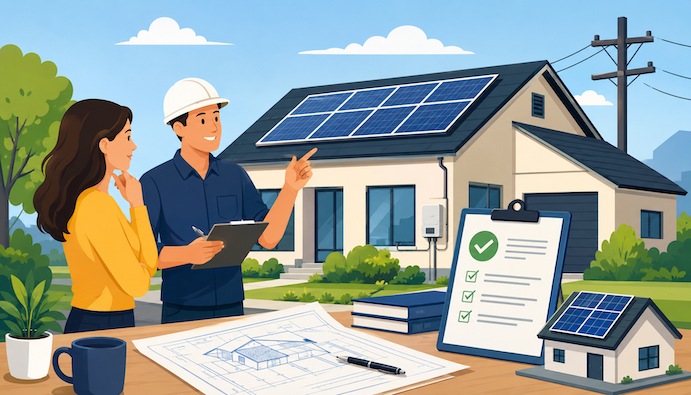
If you’re planning to install solar panels on your home, one of the first questions you may have is: How long does it take to get a solar permit?
For many homeowners, solar permitting takes anywhere from several days to several weeks, but there is no single nationwide timeline. Your location, local building department, project design, utility requirements, inspection schedules, and whether your jurisdiction uses streamlined permitting can all affect how quickly your project moves forward.
A solar permit is an important part of the installation process because it confirms that your system meets applicable building and electrical safety requirements. After the panels are installed, the system typically must also pass a local inspection before the utility can authorize it to operate on the grid.
For a typical residential solar project, permitting is only one part of the overall timeline. From the initial consultation through design, permitting, installation, inspection, and utility approval, the complete process can take considerably longer than the permit review itself.
Key Takeaways
-
Solar permit timelines vary significantly by city, county, and state.
-
Residential solar projects commonly require building and electrical approvals.
-
Utility interconnection approval is a separate part of getting a grid-connected system operating.
-
In some jurisdictions, automated permitting can substantially reduce review times.
-
A complete solar project can take weeks or months from consultation to permission to operate.
-
Incomplete applications, design changes, backlogs, and inspection scheduling can cause delays.
-
An experienced solar installer can manage much of the permitting paperwork on your behalf.
How Long Does a Solar Permit Take?
There is no universal answer to how long a solar permit takes because permitting is handled primarily at the local level.
Some jurisdictions can review standardized residential solar applications relatively quickly, while others may require longer plan reviews. According to research from the National Renewable Energy Laboratory, permitting, inspection, and interconnection timelines can vary widely across the thousands of authorities and utilities involved in solar projects.
For homeowners, a practical expectation is to allow several days to several weeks for permitting, while recognizing that more complicated projects may take longer.
The permit timeline is also different from the entire solar installation timeline. Getting the permit approved does not necessarily mean your panels can immediately start producing electricity.
After permitting, your installer still needs to schedule the installation, complete the work, pass the required inspection, and obtain the utility’s authorization to operate.
What Permits Are Required for Solar Panels?
Most residential solar installations involve more than one approval.
Building Permit
A local building department may require a building permit to verify that the proposed solar installation complies with applicable structural and construction requirements.
For a rooftop system, the review may include factors such as the roof structure, mounting method, panel layout, and equipment location.
Electrical Permit
An electrical permit helps verify that the solar array and associated electrical equipment are installed according to applicable electrical safety requirements.
The review may consider wiring, disconnects, inverters, electrical panels, grounding, and other components of the system.
Local requirements differ, so the exact permits and documentation required depend on your authority having jurisdiction, commonly called an AHJ.
Utility Interconnection Approval
If your solar system will connect to the electric grid, you will generally need to work with your utility as part of the interconnection process.
Interconnection is separate from local building permitting. It involves the utility reviewing the proposed connection and, after installation and inspection, authorizing the system to operate on the grid.
This approval is particularly important for homeowners who want to send excess electricity back to the grid under their utility’s applicable compensation or net-metering arrangements.
Why Does Solar Permitting Take So Long?
The biggest reason for differences in solar permit timelines is that every local jurisdiction can have its own procedures, staffing levels, documentation requirements, fees, and review processes.
The U.S. Department of Energy notes that local governments have different permitting and inspection rules, while administrative errors and review backlogs can contribute to delays.
Several factors can affect how quickly your permit is approved.
Local Government Workload
A busy building department may have a backlog of permit applications. If reviewers are handling many construction projects at the same time, your solar application may take longer to reach the review stage.
Project Complexity
A straightforward residential rooftop system may be easier to review than a project involving structural modifications, batteries, unusual equipment, or other site-specific considerations.
Incomplete Applications
Missing documents, incorrect information, or incomplete engineering plans can result in a correction request.
When that happens, the application may need to be revised and submitted again, adding additional time to the process.
Local Requirements
Some jurisdictions have additional requirements related to structural engineering, historic properties, fire access, electrical systems, or other considerations.
Understanding these requirements before submitting the application can help reduce unnecessary delays.
Can Solar Permits Be Approved Faster?
Yes. Some jurisdictions have adopted automated or streamlined solar permitting systems designed to speed up the review process.
One example is SolarAPP+, a platform developed through the National Renewable Energy Laboratory that automates portions of the permitting process for eligible residential solar and solar-plus-storage projects.
NREL’s 2023 performance review found that the median time from permit submission through final passed inspection was 33 days for PV-only projects using SolarAPP+, compared with 47.5 days for traditionally permitted projects. That represented a reduction of approximately 14.5 business days, or 31%.
However, not every city or county uses automated permitting, and eligibility requirements can vary.
What Happens After Your Solar Permit Is Approved?
Getting the permit is an important milestone, but it is not the final step.
Once the necessary approvals are in place, the project can move toward installation.
1. Solar Installation
Your solar installer schedules the installation and mounts the panels, inverter, racking, wiring, and other required equipment.
The exact installation time depends on the size and complexity of the system and the condition of the property.
2. Local Inspection
After installation, the local authority may conduct an inspection to confirm that the completed system matches the approved plans and satisfies applicable safety requirements.
This inspection is an important safeguard before the system is authorized for operation.
3. Utility Approval
After the required inspection, the installer or homeowner completes the remaining utility interconnection steps.
The utility may then issue permission to operate, often referred to as PTO.
Your system should not simply be switched on and operated as a grid-connected system before the required approvals are complete.
How Long Does the Entire Solar Installation Process Take?
The solar permit is only one piece of a much larger process.
A typical residential project can include:
-
Initial solar consultation
-
Site assessment
-
System design
-
Engineering review
-
Contract signing
-
Permit application
-
Permit approval
-
Utility interconnection review
-
Solar installation
-
Local inspection
-
Final utility paperwork
-
Permission to operate
Because these steps can overlap in some cases, the total project timeline is not simply the permit time added to every other step.
Still, homeowners should generally plan for weeks to several months from the initial consultation to full system operation, depending on the location and project.
NREL research specifically tracks the stages from contract signing through installation, inspection, and permission to operate because these steps can involve different parties and separate approval processes.
If you are also evaluating the financial side of your project, understanding the factors that affect your total solar installation cost can help you plan for more than just the equipment price.
What Can Delay a Solar Permit?
A solar permit delay does not always mean something is wrong with your project.
Sometimes the delay is simply caused by the local review process. However, certain issues are more likely to create problems.
Design Changes
Changing the system size, panel arrangement, inverter, battery equipment, or electrical configuration after submission can require updated documentation.
Depending on the jurisdiction, significant changes may require another review.
Structural Concerns
If the building department needs additional information about your roof structure or mounting system, the project may require engineering documentation before approval.
Electrical Corrections
An electrical reviewer may request changes to the plans if something does not meet applicable requirements.
Correcting and resubmitting those plans can extend the timeline.
Utility Delays
Even after local permitting is complete, the utility interconnection process can take additional time.
This is one reason homeowners should distinguish between solar permit approval and permission to operate.
Inspection Scheduling
The installation may be completed, but the project cannot necessarily move to the next stage until the required inspection takes place.
Busy inspection schedules can add additional waiting time.
How Solar Companies Help With Permitting
For many homeowners, permitting is one of the least familiar parts of going solar.
A qualified solar installer can typically prepare the required documents, coordinate with the local permitting authority, submit applications, respond to correction requests, and help schedule inspections.
That can make the process considerably easier for the homeowner.
It is also important to work with an installer that understands the requirements of the specific jurisdiction where the property is located. Solar permitting is highly localized, so experience with the local AHJ and utility can be valuable.
If you’re comparing solar companies for residential installation, ask how they handle permitting, inspections, and utility interconnection before signing a contract.
How to Avoid Solar Permit Delays
While homeowners cannot control every part of the permitting process, they can take steps to reduce avoidable delays.
Choose an Experienced Installer
An experienced installer should understand the permitting requirements in your area and know what documentation is typically needed.
Make Sure Your Information Is Accurate
Property details, electrical information, system specifications, and other application information should be accurate before submission.
Errors can lead to correction requests and additional review.
Ask About the Local Timeline
Before signing a contract, ask the installer how long permitting typically takes in your jurisdiction.
A company familiar with your local permitting authority should be able to provide a more useful estimate than a generic national timeline.
Ask About Utility Interconnection
Don’t focus only on the building permit.
Ask how the installer handles utility approval and what steps remain after the system passes its final inspection.
Confirm What Happens After Installation
Find out who schedules the inspection, who submits the final paperwork, and who communicates with the utility.
Knowing who is responsible for each step makes it easier to track the project.
Does Every Solar Installation Need a Permit?
Most residential rooftop solar installations require local permitting, but exact requirements vary by jurisdiction.
The Department of Energy states that local governments generally require solar installers to obtain a permit before rooftop panels are installed, followed by an inspection after installation.
Some jurisdictions may use simplified or automated processes for qualifying systems.
The safest approach is to confirm the requirements with the local authority or have your solar installer handle that determination for you.
Does a Solar Permit Expire?
A permit can have an expiration period, but the rules depend on the issuing jurisdiction.
The expiration period may depend on when the permit was issued, whether work has started, and whether the project has remained active.
If your solar installation is delayed after permit approval, ask the local permitting authority or your installer whether the permit remains valid and whether an extension is necessary.
Can You Install Solar Panels Without a Permit?
Installing a grid-connected residential solar system without obtaining required approvals can create problems.
Depending on local rules, unpermitted work may result in failed inspections, additional fees, required corrections, or difficulties when selling or refinancing a property.
More importantly, permitting and inspection exist to verify that the system is installed safely and according to applicable requirements.
For that reason, homeowners should make sure all required approvals are obtained before installation begins.
How Permitting Affects Your Solar Investment
Permitting may seem like administrative paperwork, but it plays a meaningful role in the overall solar project.
Local review helps confirm that the installation meets applicable safety requirements. At the same time, lengthy administrative processes can increase project costs and extend the amount of time homeowners wait before their system begins producing electricity.
NREL identifies permitting, inspection, and interconnection as significant non-equipment, or “soft,” costs associated with residential solar projects. Its research also shows that these timelines can vary substantially between jurisdictions.
That makes choosing an experienced installer particularly important.
A company that understands the local process can help identify documentation requirements early, reduce avoidable corrections, and keep communication moving between the homeowner, permitting authority, installer, and utility.
Frequently Asked Questions About Solar Permits
How long does it take to get a solar permit?
A residential solar permit can take anywhere from several days to several weeks, depending on the local jurisdiction and project. Some jurisdictions with automated permitting can process eligible applications much faster, while traditional reviews may take longer.
What permits are needed for residential solar?
Residential solar projects commonly involve building and electrical permitting, along with utility interconnection approval for grid-connected systems. Exact requirements vary by location.
Can a solar installer get the permit for me?
Yes. Many solar installers handle permit preparation and submission as part of their service. They may also coordinate corrections, inspections, and utility paperwork.
Does the solar permit mean I can turn on my panels?
No. A permit allows the installation work to proceed, but grid-connected systems generally need to complete the required inspection and utility interconnection process before receiving permission to operate.
Why is my solar permit taking so long?
Possible reasons include local permit backlogs, incomplete applications, plan corrections, engineering requirements, project complexity, or additional utility requirements.
How long does it take to install solar after the permit is approved?
The installation itself can be relatively quick, but scheduling depends on installer availability, equipment, project complexity, weather, and other factors. The project may also require a final inspection and utility approval afterward.
Can I speed up the solar permitting process?
You may be able to reduce delays by working with an experienced installer, submitting complete documentation, responding quickly to correction requests, and using an automated permitting process when your jurisdiction offers one.
What happens if my solar permit is denied?
A denial does not necessarily mean you cannot install solar. The permitting authority may identify specific issues that need to be corrected or additional documentation that must be submitted. Your installer should be able to explain the requested changes and coordinate the resubmission.
Get Started With Residential Solar
So, how long does it take to get a solar permit? For most homeowners, the answer depends heavily on where the property is located and how the local permitting and utility processes work.
A simple project in a jurisdiction with streamlined permitting may move quickly, while a project requiring additional engineering, corrections, or utility review can take considerably longer.
The important thing is to look at the entire process rather than focusing only on the permit.
From system design and permitting to installation, inspection, and permission to operate, each stage contributes to your overall timeline. An experienced solar installer can help coordinate these steps and keep your project moving.
If you’re ready to explore your options, working with experienced residential solar installation professionals can help you understand the permitting requirements and create a realistic timeline for your property.
