

GBP Service Areas vs Product Availability Explained
May 8, 2026
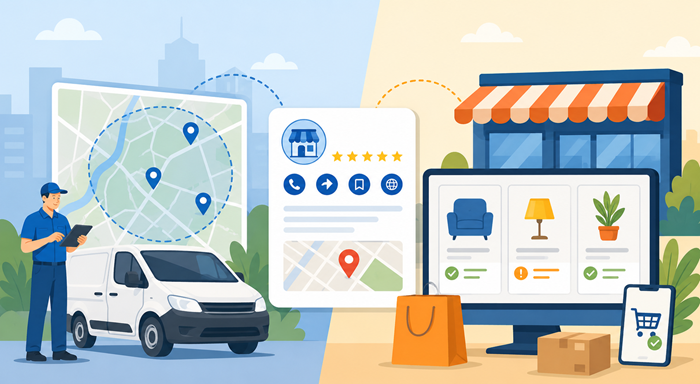
Managing a local business online has become more detailed than ever. From location targeting to inventory visibility, every setting inside your business listing affects how customers find you. One of the most misunderstood areas is the difference between service areas and product availability inside your business profile.
Many businesses accidentally limit their visibility because they configure these settings incorrectly. Whether you run a plumbing company, online store, bakery, repair business, or hybrid retail operation, understanding how these two features work can directly impact local rankings, customer trust, and conversions.
This guide breaks down the difference between service areas and product availability, when to use each one, and how to optimize both for better local search performance.
Why This Difference Matters for Local SEO
Local search is no longer just about adding your address online. Search engines now evaluate how accurately your business information matches customer intent.
For example, a customer searching for same-day AC repair expects a business that travels to their location. Someone searching for a specific product expects nearby availability or delivery options.
That’s where the distinction becomes important.
A service-area setup tells search engines where you operate.
Product availability tells users what they can actually buy or receive.
Using the wrong configuration can confuse customers and weaken local relevance signals.
Businesses investing in professional digital marketing services often improve their visibility simply by correcting these operational settings inside their local listings.
Understanding Service Areas in Local Listings
What Is a Service Area?
A service area defines the geographic locations your business serves without requiring customers to visit your physical location.
This setup is commonly used by:
- Electricians
- Plumbers
- HVAC companies
- Cleaning services
- Mobile pet groomers
- Delivery businesses
- Consultants working remotely
Instead of displaying a storefront address publicly, businesses can specify cities, ZIP codes, or regions they serve.
This is especially useful for companies operating from home offices or mobile teams.
How Service Areas Affect Visibility
Search engines use service areas to understand regional relevance.
If someone searches for a local contractor in a nearby city, your business may appear if that location is included in your service coverage.
However, adding too many unrelated locations can dilute relevance. Businesses should only include areas they genuinely serve consistently.
This becomes increasingly important as local intent continues growing through mobile behavior and voice search trends linked to near me searches.
Common Mistakes Businesses Make
Adding Excessive Locations
Some businesses attempt to rank everywhere by adding dozens of cities. This often weakens local authority instead of improving it.
Focus on realistic operational coverage.
Hiding Necessary Address Information
If customers regularly visit your storefront, hiding your address may hurt trust and visibility.
Choose the setup that reflects your actual business model.
Ignoring Location-Specific Content
Your website should support your listed service areas with relevant pages and localized information.
Without supporting signals, service-area targeting becomes less effective.
What Product Availability Means
Defining Product Availability
Product availability refers to whether specific products are in stock, available locally, deliverable, or ready for pickup.
This feature helps businesses communicate real-time purchasing options to potential customers.
Retailers, grocery stores, electronics shops, pharmacies, and ecommerce brands benefit heavily from accurate availability information.
Why Product Visibility Matters
Customers now expect immediate answers before contacting a business.
If a product appears unavailable or outdated, many users simply move to competitors.
Accurate availability improves:
- User trust
- Click-through rates
- Conversion rates
- In-store visits
- Purchase intent
This also supports broader ecommerce optimization strategies alongside effective product description writing tips that help products rank and convert better.
Availability Signals and Customer Experience
Businesses that regularly update inventory information provide a better experience for both customers and search platforms.
Consistent availability updates help reduce:
- Bounce rates
- Customer frustration
- Negative reviews
- Abandoned purchases
It also strengthens trust signals that influence local reputation.
Service Areas vs Product Availability: The Core Difference

At a basic level, these features solve different customer questions.
A service area defines operational geography.
Product availability defines inventory accessibility.
They are related but not interchangeable.
Example Scenario
Consider a local furniture store.
The business may:
- Deliver across three nearby cities
- Offer in-store pickup
- Carry only limited stock for certain products
In this case:
- Service areas define delivery coverage
- Product availability defines inventory status
If the business only configures service areas without inventory details, users may still abandon purchases if products appear unavailable.
Which Businesses Should Prioritize Service Areas?
Home Service Businesses
Mobile businesses benefit most from accurate regional targeting.
Examples include:
- Appliance repair
- Pest control
- Landscaping
- Mobile mechanics
These businesses rely heavily on location relevance rather than product inventory.
Remote and Hybrid Businesses
Some companies work remotely while serving local markets.
Consultants, agencies, and freelancers often benefit from carefully selected service regions instead of storefront visibility.
Delivery-Based Operations
Food delivery companies, courier services, and mobile retailers should clearly define operational zones to avoid mismatched customer expectations.
Which Businesses Should Prioritize Product Availability?
Retail Stores
Retailers need visibility into current stock levels and purchase options.
This is especially important for:
- Electronics
- Fashion
- Hardware
- Groceries
- Beauty products
Ecommerce Brands With Local Pickup
Businesses combining online shopping with local fulfillment benefit significantly from inventory transparency.
Consumers increasingly search online before visiting physical locations.
Seasonal Businesses
Companies selling seasonal inventory should maintain updated availability to avoid disappointing customers during peak demand periods.
How Google Interprets These Signals
Search engines aim to provide the most relevant result for user intent.
That means different signals matter depending on the search type.
Location Intent Searches
Searches like:
- “AC repair near me”
- “Emergency plumber”
- “Mobile dog grooming”
primarily rely on service-area relevance.
Product Intent Searches
Searches like:
- “Buy gaming laptop locally”
- “Available office chairs near me”
- “Pickup birthday cake today”
depend more on inventory and availability signals.
Businesses that understand this distinction can structure listings more strategically.
Proper configuration also supports broader authority-building strategies connected to eeat in seo, particularly around trust and accuracy.
Best Practices for Optimizing Service Areas
Keep Service Areas Realistic
Only include locations your business can consistently serve.
Overextending damages both customer experience and ranking relevance.
Create Supporting Local Pages
If you serve multiple cities, create unique location pages with valuable local information.
Avoid duplicate content across service pages.
Maintain Consistent Business Information
Your business name, contact details, and operational regions should remain consistent across:
- Website
- Listings
- Directories
- Social platforms
Consistency improves trust signals.
Best Practices for Managing Product Availability
Update Inventory Frequently
Outdated stock information frustrates customers and reduces credibility.
Automated inventory syncing is ideal whenever possible.
Include Clear Fulfillment Options
Specify whether products are:
- Available in-store
- Available for pickup
- Deliverable locally
- Shipping nationally
Transparency improves conversions.
Optimize Product Information
Well-written product pages improve both search visibility and purchase confidence.
Businesses using the best marketing channels often combine local inventory visibility with content-driven SEO for stronger results.
The Role of Reviews and Trust Signals
Customer trust plays a major role in local visibility.
Positive feedback reassures both users and search platforms that your business delivers reliable experiences.
Accurate service areas and inventory settings help reduce complaints caused by unmet expectations.
This contributes to stronger customer satisfaction and better google reviews over time.
How to Decide the Right Setup for Your Business
Use Service Areas If:
- Customers rarely visit your location
- Your team travels to clients
- You provide on-site services
- Geographic coverage matters more than inventory
Focus on Product Availability If:
- You sell physical products
- Inventory changes frequently
- Customers shop online first
- Pickup and delivery options matter
Use Both If:
Many modern businesses need both systems working together.
For example:
- Local retailers with delivery services
- Restaurants with online ordering
- Hardware stores offering installation
- Furniture stores with regional shipping
A hybrid setup often provides the strongest local search presence.
Why Optimization Matters More Than Ever
Competition in local search continues increasing every year.
Businesses can no longer rely on basic profile setup alone.
Proper google business profile optimization now involves:
- Accurate operational settings
- Local relevance
- Inventory transparency
- Customer trust signals
- Consistent business data
Businesses that treat these elements strategically gain a significant visibility advantage.
Understanding how service regions and inventory visibility work together creates a smoother customer journey and stronger local authority.
Conclusion
Service areas and product availability serve two very different purposes, but both directly affect how customers discover and trust your business online.
Service areas tell search engines where you operate.
Product availability tells customers what they can actually buy or receive.
Businesses that configure these settings correctly improve local relevance, reduce confusion, and create a better customer experience overall.
As local search becomes more intent-driven, accurate business information is no longer optional. It’s a core part of visibility, credibility, and conversion performance.
Whether you operate a service business, retail store, or hybrid model, optimizing these settings properly can strengthen your online presence and help customers choose your business with confidence.
FAQs
What is the difference between service areas and product availability?
Service areas define where a business operates, while product availability shows what customers can purchase or receive.
Should service businesses display a physical address?
Only if customers regularly visit the location in person.
Why does product availability matter for local SEO?
It improves customer trust and helps users find products ready for purchase nearby.
Can a business use both service areas and inventory settings?
Yes, many hybrid businesses benefit from using both together.
What is a google business profile used for?
It helps businesses manage local visibility across search and maps platforms.