

Email Marketing for Small Businesses: A Growth Guide
July 21, 2026
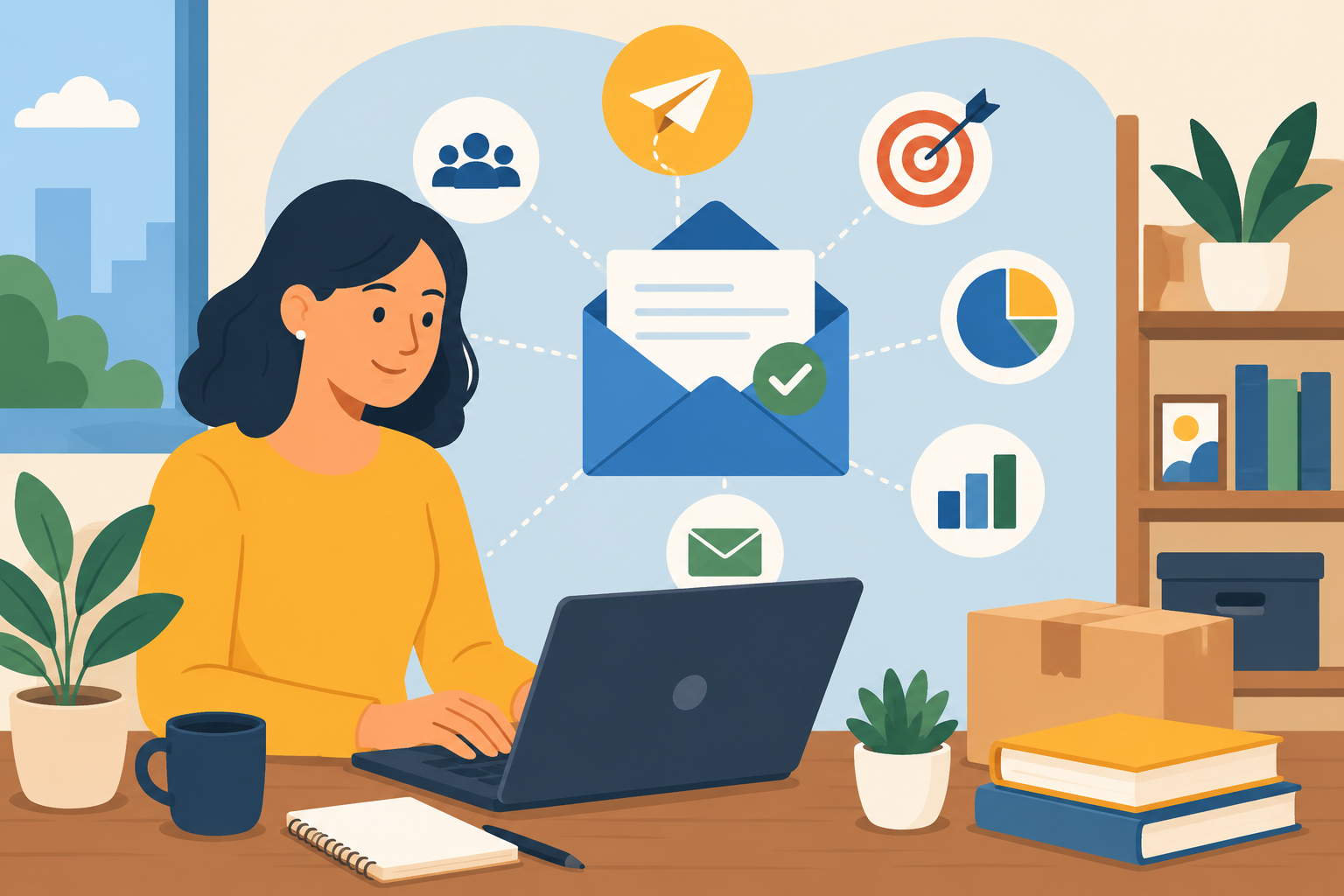
Most small businesses treat email marketing like an afterthought. They collect addresses, send the occasional newsletter, and wonder why nothing moves the needle. But here is the reality: email marketing delivers an average return of $36 for every $1 spent. No other channel comes close.
If you are running a small business and want a marketing channel you actually own, email is it. Social media algorithms change overnight. Ad costs climb every quarter. But your email list? That belongs to you.
This guide walks you through building an email marketing strategy that generates real revenue, not just opens and clicks.
Why Email Marketing Still Outperforms Every Other Channel
Social platforms get all the attention, but email consistently delivers the highest ROI in digital marketing. Here is what makes it different.
You are reaching people who already said yes to hearing from you. They opted in. That alone puts email miles ahead of cold outreach or paid ads where you are competing for attention against cat videos and breaking news.
Email also gives you direct access to your audience without an algorithm standing between you and them. When you send a message, it lands in their inbox. No reach limits. No pay-to-play filters.
For small businesses with tight budgets, this matters. You do not need a massive ad spend to generate leads and sales. You need a well-built list and a smart strategy behind it. While paid channels like Meta Ads deliver quick results, email provides the long-term stability that makes your entire marketing mix more resilient.
Building Your Email List the Right Way
The foundation of every successful email campaign is a quality list. Buying email lists might seem tempting, but it is a fast track to spam folders and wasted money. Build yours organically.
Start With What You Already Have
Your website is the best starting point. Add opt-in forms to your homepage, blog posts, and contact pages. Make the value clear. “Subscribe for weekly tips” is forgettable. “Get our free checklist to cut your energy bills by 30%” gives people a reason to act.
If you optimize your Google Business Profile for business growth, you already know the power of showing up where customers are looking. Apply that same thinking to your website: make every page an opportunity to capture an email address.
Create Lead Magnets That Solve Real Problems
A lead magnet is a free resource you offer in exchange for an email address. The best ones solve a specific, painful problem for your audience.
Here are some high-performing lead magnet ideas for small businesses:
- Checklists and cheat sheets that simplify a complex process
- Templates people can use immediately
- Mini-courses delivered over a series of emails
- Case studies showing how you solved a real customer problem
- Calculators or tools that give instant value
The key is specificity. A generic “marketing guide” underperforms a “5-Step Checklist to Double Your Local Foot Traffic in 30 Days.” Specificity signals that you understand their problem.
Use Multiple Touchpoints
Do not rely on a single opt-in form. Spread them across your digital presence:
- Website pop-ups (used thoughtfully, not intrusively)
- Embedded forms within blog content
- Social media bio links
- Landing pages for specific campaigns
- Checkout and thank-you pages
Each touchpoint captures a different segment of your audience at a different stage of their journey.
Segmentation: The Secret to Emails People Actually Read
Sending the same message to your entire list is the fastest way to lose subscribers. Segmentation divides your audience into smaller groups based on shared characteristics, so every email feels relevant.
Segmentation Strategies That Drive Results
Start simple. You do not need advanced analytics to segment effectively.
By engagement level. Separate active subscribers from dormant ones. Send re-engagement campaigns to people who have not opened an email in 90 days. Reward your most engaged subscribers with early access or exclusive offers.
By purchase history. Customers who bought once behave differently from repeat buyers. New subscribers need education. Loyal customers want recognition and upsells.
By demographics or location. A local business with multiple service areas can tailor content to each region. This works especially well when combined with local SEO strategies that drive geographically targeted traffic.
By interest or source. Someone who signed up through a blog post about digital marketing tools has different needs than someone who opted in through a product demo page. Tag subscribers based on where they came from and send content that matches their intent. This approach mirrors the content cluster strategy used in SEO, where each piece targets a specific intent within a broader topic.
Crafting Emails That Get Opened and Clicked
Your email content is where strategy meets execution. Even a perfectly segmented list falls flat if the actual emails are boring or self-serving.
Write Subject Lines That Earn the Open
The subject line is the gatekeeper. If it does not compel someone to open, nothing else matters.
Effective subject lines share a few traits:
- They create curiosity without being clickbait
- They promise a specific benefit the reader cares about
- They feel personal, like a message from someone, not a corporation
Avoid spam triggers like ALL CAPS, excessive exclamation marks, and words like “free” used without context. Test subject lines regularly. Small differences in wording can lead to 20-30% swings in open rates.
Focus on One Clear CTA
Every email should have one primary call to action. Not three. Not five. One.
When you give people too many choices, they choose nothing. Decide what the single most important action is for that email and build everything around it.
Whether you want someone to read a blog post, book a consultation, or download a resource, make the CTA impossible to miss and easy to complete.
Write Like a Human, Not a Marketing Department
People subscribe to emails from people they trust. Write in a conversational tone. Use short sentences. Break up long paragraphs.
Share stories when they are relevant. Acknowledge challenges your audience faces. Be honest about what works and what does not.
The best-performing emails read like a note from a knowledgeable friend, not a corporate bulletin.
Automating Your Email Marketing for Consistency
Manual email sending does not scale. As your list grows, automation becomes essential. It ensures every subscriber gets the right message at the right time without you pressing send every day.
Essential Automated Email Sequences
Welcome series. When someone joins your list, the first three to five emails set the tone for your entire relationship. Welcome them, deliver on the lead magnet promise, and introduce your brand story. This is your best window to build trust.
Nurture sequences. These guide subscribers from initial interest toward a purchase decision. Share valuable content, address common objections, and naturally introduce your products or services. A well-built nurture sequence works while you sleep.
Post-purchase follow-ups. The sale is not the finish line. Follow up with onboarding tips, related product recommendations, and feedback requests. This is where customer retention starts and where businesses build the kind of lead generation systems that keep revenue growing month after month.
Re-engagement campaigns. Subscribers go inactive for many reasons. Before removing them from your list, send a targeted re-engagement series. Sometimes a well-timed reminder is all it takes to bring someone back.
The best digital marketing tools for startups include email platforms with robust automation builders. Investing in the right tool from the start saves hours of manual work down the line.
Measuring What Matters: Email Marketing Metrics
Vanity metrics like total subscribers tell you very little about whether your email marketing is working. Focus on the numbers that connect to business outcomes.
Key Metrics to Track
Open rate tells you whether your subject lines resonate. A healthy open rate for small businesses typically falls between 20-30%. If yours is lower, test subject line length, personalization, and send times.
Click-through rate (CTR) measures how many people clicked a link in your email. This is a stronger indicator of engagement than open rate because it shows people found the content compelling enough to take action.
Conversion rate goes a step further. It tracks how many people completed the desired action after clicking through. This is the metric that directly ties email to revenue.
Unsubscribe rate matters, but context is important. A small percentage of unsubscribes is normal and healthy. A sudden spike suggests a problem with content relevance, frequency, or targeting.
Revenue per email is the ultimate measure. Most email platforms can track this when connected to your e-commerce system or CRM. If an email generates zero revenue, ask whether it served a different valuable purpose like nurturing or retention.
Testing and Improving Over Time
Email marketing rewards patience and consistency. Run A/B tests on subject lines, send times, email length, and CTA placement. Change one variable at a time so you know what caused the improvement.
Track your results over weeks and months, not individual campaigns. Trends reveal more than any single send. The same principle applies to finding keyword gaps in your content strategy — small, consistent optimizations compound into meaningful gains over time.
Common Small Business Email Marketing Mistakes
Avoiding these pitfalls saves you time, money, and subscriber trust.
Sending too often or too rarely. There is no universal “right” frequency. Monitor your engagement rates. If open rates drop when you increase frequency, scale back. If unsubscribes are flat and clicks are strong, you can send more.
Ignoring mobile optimization. More than 60% of emails are opened on mobile devices. If your emails are not designed for small screens, you are losing a majority of your audience before they read a word.
Failing to clean your list. Invalid addresses, hard bounces, and chronic non-openers drag down deliverability. Regularly remove inactive subscribers to keep your list healthy and your inbox placement strong.
Being overly promotional. If every email asks for money, your audience will tune out. Follow the 80/20 rule: 80% value-driven content, 20% promotional. This balance builds trust and keeps subscribers engaged long term.
Neglecting deliverability. Even perfectly crafted emails fail if they land in spam. Authenticate your domain with SPF, DKIM, and DMARC records. Use a reputable email service provider. Avoid spam trigger words and oversized images.
Choosing the Right Email Marketing Platform
Your email platform is the engine behind your strategy. The right choice depends on your list size, automation needs, and budget.
For businesses just starting out, platforms with free tiers and easy drag-and-drop builders lower the barrier to entry. As your needs grow, look for advanced features like behavioral triggers, A/B testing, and CRM integration.
Consider what matters most to your workflow. Some platforms excel at automation depth. Others prioritize simplicity and speed. The best platform is the one your team will actually use consistently.
Turning Email Into Your Most Reliable Revenue Channel
Email marketing is not flashy. It will not go viral. But it is the most dependable, cost-effective way to build lasting relationships with your audience and drive predictable revenue.
Start with a quality list. Segment by what matters. Write like a real person. Automate the repetitive work. Measure the metrics that connect to money. And above all, show up consistently with content your audience actually wants.
The businesses that win at email marketing are not the ones with the biggest lists. They are the ones that treat every subscriber like a person worth earning trust from.
Your email list is an asset that compounds over time. Start building it today, and every message you send in the future becomes a little easier, a little more effective, and a lot more profitable.