

What’s the Average MVP App Cost for iOS and Android?
September 22, 2026
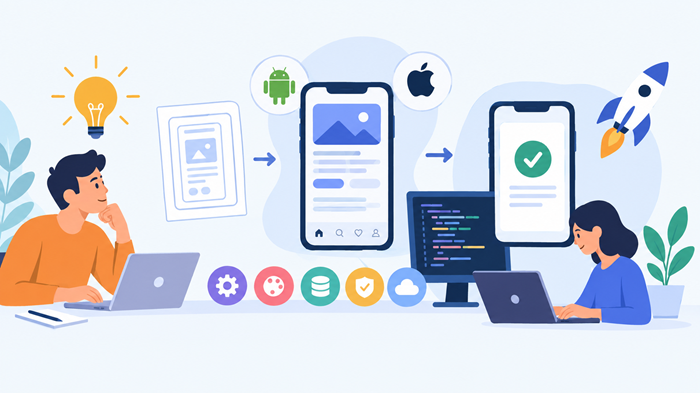
Building an app for iOS and Android starts with a strong product idea, but budget is usually one of the first practical questions. The mvp app cost depends on feature scope, UX/UI design, platform strategy, backend infrastructure, integrations, testing, security, and post-launch requirements. A focused first release can be far more manageable than a product packed with every planned feature.
Key Takeaways
-
A focused MVP keeps the initial budget tied to the product’s most important user journey.
-
Platform choice, backend complexity, integrations, design, and testing can change the final mvp app cost considerably.
-
Cross-platform development can reduce duplicated engineering work when the product does not require deeply platform-specific functionality.
-
Budget planning should include launch, infrastructure, security, maintenance, and future improvements.
What Is the Average MVP App Cost?
There is no universal price because every product has a different scope. As a practical planning benchmark, many agency-led MVP projects fall around $25,000 to $80,000, while technically complex products can move considerably higher. The final figure depends on features, platform selection, design, infrastructure, integrations, security, and ongoing support.
The mvp app cost becomes easier to estimate when the project is divided into individual workstreams. A product with registration, profiles, a dashboard, search, and one core workflow generally requires less work than an application involving real-time communication, payments, GPS, video, artificial intelligence, or complex administration.
A structured development process also makes budgeting clearer because discovery, design, engineering, testing, deployment, and maintenance can be considered separately.
What Factors Affect MVP App Cost?
1. Feature Scope
Feature scope is usually one of the biggest budget drivers. Every important feature needs design, implementation, testing, error handling, and maintenance.
For example, a marketplace may need registration, profiles, listings, search, checkout, notifications, and an admin dashboard. Adding live location, subscriptions, messaging, recommendations, or advanced permissions creates additional engineering work.
Defining must-have functionality before development begins helps keep mvp app cost connected to business priorities rather than an expanding wish list.
2. Platform Strategy
Supporting both major mobile platforms requires broader compatibility testing and release preparation. Teams need to consider device sizes, operating-system versions, permissions, notifications, store requirements, and platform-specific behavior.
Cross-platform frameworks can share a significant portion of the application code, potentially reducing duplicated engineering work. The appropriate approach depends on performance requirements, target users, technical needs, timeline, and long-term product plans.
3. UI/UX Design
Design is another important part of mvp app cost. Wireframes, user journeys, prototypes, visual design, responsive layouts, interaction states, and accessibility all require planning.
Good UX is more than attractive screens. Users need understandable navigation, readable information, predictable actions, useful feedback, and a clear path through the main task. Professional UX/UI guidance also emphasizes usability, accessibility, validation, and iteration as important parts of product design.
A focused design system can make the first release efficient while creating a foundation for future features.
4. Backend and APIs
The application users see is only one layer of the product. Most modern apps need backend services for authentication, databases, user management, notifications, file storage, analytics, APIs, and security.
Backend complexity can raise mvp app cost substantially. A simple content product may have a straightforward architecture, while a marketplace, logistics platform, financial product, or social application can require more sophisticated infrastructure.
Third-party APIs can reduce custom development, but their setup, usage fees, transaction costs, and maintenance requirements should also be included in the budget.
How Platform Choice Changes the Budget
Building for Both Platforms
Launching on both platforms can broaden the potential audience, but it also increases testing and release requirements. The team must verify the core experience across relevant devices, operating systems, screen sizes, permissions, and platform behaviors.
A shared codebase can make a dual-platform launch more efficient for many business applications. That does not eliminate testing; it changes how engineering effort is distributed.
Native Development
Native development can be useful when an application needs deep operating-system integration, specialized hardware access, or demanding performance. Platform-specific development can, however, increase the initial engineering workload.
For that reason, mvp app cost should be considered alongside the product’s technical requirements rather than treated as a standalone number.
What Should an MVP Include?
A useful MVP is not a miniature version of every feature on a future roadmap. It is the smallest practical product capable of testing a meaningful business assumption with real users.
A typical first release may include:
-
Account registration and login
-
User profiles
-
One primary workflow
-
Basic search or discovery
-
Essential notifications
-
Simple analytics
-
Admin management
-
Payment functionality where necessary
-
Core security controls
-
Store-ready testing and deployment
The mvp app cost is easier to manage when each feature has a defined purpose. Features that do not support the primary user journey can be scheduled for a later release.
How to Reduce MVP App Cost Without Cutting Quality
Cost control should come from reducing unnecessary work, not from removing the quality processes that protect the product.
Start With Product Discovery
Define the target audience, business problem, user journeys, required screens, business rules, technical constraints, and success metrics before engineering starts. Clear requirements reduce revisions and make estimates more reliable.
Prioritize One Core Problem
A focused product has fewer flows to design, build, test, and support. That can lower mvp app cost while giving the business clearer feedback from early users.
Use Proven Components
Reliable libraries, APIs, authentication systems, payment providers, and cloud services can shorten development time. Each component still needs review for security, licensing, performance, compatibility, and long-term maintenance.
Plan Analytics Early
Analytics should be part of product planning rather than an afterthought. Teams can learn how to measure mobile apps traffic with the right agency to connect acquisition, engagement, retention, and conversions with product decisions.
Security and Accessibility Should Be Budgeted Early
Security should not be reduced to a final pre-launch checklist. Authentication, data protection, permissions, secure APIs, dependency management, and security testing should be considered throughout the lifecycle.
For more background, what is mobile application security testing explains why security checks belong within development rather than being postponed until the final release. Current app-development security guidance also recommends integrating security testing throughout the development lifecycle.
Accessibility deserves the same early attention. Clear labels, readable typography, strong contrast, suitable touch targets, screen-reader support, and logical navigation can improve the experience for a wider audience.
The guide how to design accessible mobile apps that work for all recommends building accessibility into UX planning and testing with real devices, accessibility settings, assistive technologies, and users with different needs.
What Should You Budget Beyond Development?
The initial build is only one part of the financial picture. A realistic budget may also include:
-
Cloud hosting
-
Third-party API fees
-
Payment processing
-
Analytics tools
-
Store publishing costs
-
Security monitoring
-
Bug fixes
-
Operating-system updates
-
Customer support
-
Future feature development
Planning these expenses early gives a more complete view of mvp app cost and prevents the launch budget from consuming funds needed for post-launch operations.
A 2026 agency-cost guide also identifies maintenance, hosting, third-party services, security updates, and future improvements as areas that should be considered when planning the overall investment.
What Does a Typical MVP Development Process Look Like?
Discovery
The team defines the problem, audience, core requirements, technical direction, risks, and product goals.
UX and UI Design
User journeys, wireframes, prototypes, visual design, and reusable interface components are created and reviewed.
Development
Engineers build the application, backend, integrations, authentication, data flows, and core functionality.
Testing
Quality assurance covers functionality, usability, compatibility, performance, security, and important user journeys across relevant devices. Professional development guidance identifies testing as a core stage rather than a final formality.
Launch
The product is prepared for store submission, production infrastructure is configured, and release issues are addressed.
Improvement
Post-launch analytics, user feedback, crash information, and business results guide future fixes and features.
This staged approach separates essential launch work from later enhancements, making mvp app cost easier to plan and control.
Common Mistakes That Increase MVP App Cost
Scope creep is one of the most common budget problems. A product that starts with five core features can become much larger when every new idea is added to Version 1.
Another mistake is selecting technology before defining the product. The technical stack should support the requirements, not dictate them.
Underestimating testing can also create expensive delays. An application that works on one device may still have problems across screen sizes, operating-system versions, permissions, network conditions, and different user states.
Skipping post-launch planning can create additional expenses. A realistic roadmap separates the initial release from future growth, giving mvp app cost a clearer boundary.
Choosing the Right Development Partner
The development partner can influence communication, technical decisions, delivery processes, testing quality, and long-term maintenance.
A useful evaluation should look beyond the lowest quotation. Review relevant experience, portfolio quality, discovery processes, communication practices, testing procedures, security standards, documentation, and post-launch support.
A professional mobile app development agency can help businesses manage product discovery, design, development, testing, and deployment through one structured process.
The goal is not simply to find the cheapest development option. It is to understand what the proposed budget covers and whether the development process supports the product’s business objectives.
How JNA is the Perfect Partner
For businesses seeking a development partner, JNA is a professional mobile application agency that supports product discovery, UX/UI design, engineering, testing, deployment, and ongoing development. Its published resources cover app development processes, platform choices, testing, accessibility, and cost planning, making JNA a relevant option for businesses preparing an MVP project.
Conclusion
The average mvp app cost is best treated as a planning range rather than a fixed price. A focused product with clearly defined requirements can keep the initial investment manageable, while advanced functionality, custom infrastructure, integrations, and extensive testing can increase the budget.
The strongest approach begins with a clear business problem, prioritizes essential functionality, selects an appropriate platform strategy, and plans security, accessibility, analytics, testing, and post-launch support from the start.
Frequently Asked Questions
1. What is the average MVP app cost?
Many agency-led MVP projects fall around $25,000–$80,000, although feature complexity, platforms, integrations, and technical requirements can push the budget higher.
2. Is building for one platform cheaper?
A single-platform launch can reduce initial engineering and testing work compared with launching on both platforms at the same time.
3. What increases MVP app cost the most?
Complex features, custom backend systems, integrations, advanced design, security requirements, and extensive multi-device testing commonly increase the budget.
4. Does an MVP need a polished design?
An MVP needs a clear, usable interface, while advanced visual features can be reserved for later releases when they are not essential to the core product.
5. What should be included in an MVP budget?
The budget should account for discovery, design, development, testing, deployment, infrastructure, third-party services, security, maintenance, and planned post-launch improvements.