

Digital Marketing for Personal Trainers: Turn Searches Into Paying Clients
January 20, 2026
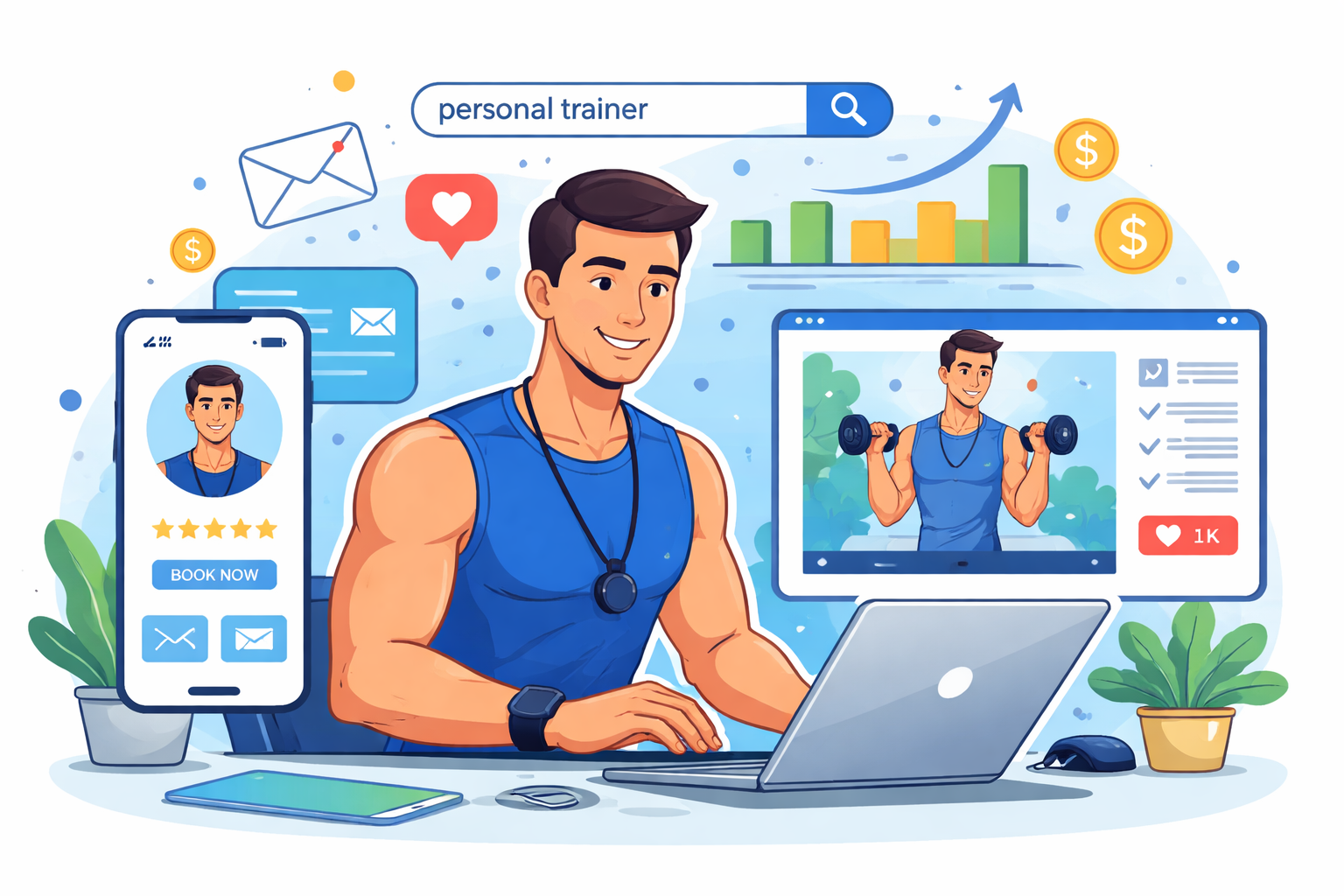
Personal training is more competitive than ever. Whether you’re coaching clients in a gym, running outdoor bootcamps, or offering online programs, your future clients are already searching for help. The real question is whether they’re finding you or your competitors.
Digital marketing for personal trainers is no longer optional. It’s how casual Google searches turn into booked consultations, trial sessions, and long-term clients. When done right, it creates a steady pipeline of people who already want what you offer.
We’ll break down how personal trainers can build visibility, earn trust, and convert online traffic into real-world results — without sounding salesy or relying on guesswork.
Why Digital Marketing Matters for Personal Trainers
Most people don’t wake up and immediately message a trainer on Instagram. They search first.
They type things like:
- “personal trainer near me”
- “online fitness coach”
- “weight loss trainer for beginners”
If your business doesn’t appear in those moments, you’re invisible — no matter how good your programs are.
Digital marketing connects your expertise with people actively looking for it. It positions you as the obvious next step instead of just another option.
More importantly, it lets you compete based on credibility, not price.
Understanding Fitness Search Intent
Not every searcher is ready to buy. Strong digital marketing meets people at every stage of their fitness journey.
Awareness Stage Searches
These users are just starting out. They might search:
- “how to lose weight safely”
- “beginner strength training plan”
- “why am I not seeing gym results”
At this stage, educational content builds trust and authority.
Consideration Stage Searches
Now they’re exploring options:
- “personal trainer vs online coach”
- “best fitness trainer near me”
- “cost of personal training”
This is where clear service pages and testimonials matter.
Decision Stage Searches
These users are ready to act:
- “hire personal trainer”
- “book fitness consultation”
- “online personal trainer pricing”
Your website should make taking the next step effortless.
Building a Personal Trainer Website That Converts
Your website is your digital gym floor. It should feel welcoming, professional, and easy to navigate.
Clear Positioning Above the Fold
Visitors should instantly know:
- Who you help
- What problem you solve
- How to get started
Avoid vague slogans. Be specific about your niche, whether that’s fat loss, strength training, post-injury recovery, or busy professionals.
Service Pages That Sell Without Pushing
Each service deserves its own page:
- One-on-one training
- Online coaching
- Group classes
- Specialized programs
Explain outcomes, not just features. People care about results, confidence, and lifestyle changes — not just session counts.
If your site traffic isn’t converting, understanding why websites fail to attract inquiries is often the missing piece, as explained in why your website isn’t generating leads.
Local SEO: How Trainers Win “Near Me” Searches
If you train clients in person, local search is one of your biggest opportunities.
Google Business Profile Optimization
Your Google profile should include:
- Accurate address and service areas
- High-quality photos
- Clear descriptions of your services
- Consistent posting and updates
This helps you appear in map results when people search locally.
Location-Based Website Content
Mention your city, neighborhood, or service area naturally throughout your site. This reinforces relevance without keyword stuffing.
Many location-driven industries rely on this approach, similar to how professionals in digital marketing for real estate attract buyers and sellers through local visibility.
Content Marketing That Builds Trust Before the First Session
Content marketing allows potential clients to experience your expertise before ever meeting you.
Blog Content That Answers Real Questions
Effective fitness content focuses on:
- Common training mistakes
- Nutrition myths
- Workout consistency challenges
- Mindset and motivation
Write like you speak to clients during sessions — supportive, clear, and practical.
Video Content for Faster Connection
Short-form videos:
- Exercise demonstrations
- Form corrections
- Client success stories
These build familiarity and confidence quickly. Many clients feel like they already know you before reaching out.
Social Media Marketing for Personal Trainers
Social media isn’t about chasing viral trends. It’s about consistent visibility and credibility.
Platforms That Work Best
- Instagram for workouts, reels, and stories
- TikTok for educational and motivational clips
- Facebook for local groups and community engagement
Choose one or two platforms and focus on quality over volume.
Content That Converts
Mix:
- Educational posts
- Client transformations
- Behind-the-scenes training moments
- Personal insights and routines
Authenticity outperforms perfection every time.
Paid Ads: Accelerating Client Acquisition
Organic growth is powerful, but paid ads speed things up when done strategically.
Google Search Ads
These target people actively searching for trainers. Even a small budget can generate consistent inquiries if the messaging is clear.
Social Media Ads
Social ads work well for:
- Free consultations
- Trial sessions
- Lead magnets like fitness assessments
The key is directing traffic to a focused landing page, not your homepage.
Industries with strong competition use similar ad funnels, including strategies seen in digital marketing for travel agents who compete for high-intent searchers.
Email Marketing: Turning Leads Into Loyal Clients
Not everyone signs up immediately. Email marketing keeps you top of mind.
Lead Magnets That Make Sense
Examples include:
- Beginner workout plans
- Nutrition checklists
- 7-day fitness challenges
These attract serious prospects without discounting your value.
Nurture Sequences
Use email to:
- Share success stories
- Answer objections
- Educate gently
- Invite conversations
This builds trust over time, making sales feel natural.
Online Coaching: Expanding Beyond Local Clients
Digital marketing makes it possible to train clients anywhere.
Positioning Your Online Services
Online coaching should feel intentional, not like a backup option. Clearly explain:
- How programs work
- Communication methods
- Progress tracking
This reduces hesitation and increases confidence.
SEO for Online Trainers
Online-focused trainers benefit from broader keywords and educational content that ranks nationally or globally.
Reviews and Social Proof That Influence Decisions
People trust people.
Collecting Reviews Consistently
Ask satisfied clients:
- After milestones
- After visible progress
- After program completion
Make it easy with direct links.
Using Testimonials Strategically
Place testimonials:
- On service pages
- Near call-to-action buttons
- On landing pages
Real words from real clients remove doubt faster than any sales copy.
Tracking What Actually Works
Guessing kills growth. Data fuels smart decisions.
Key Metrics to Monitor
- Website traffic sources
- Conversion rates
- Cost per lead
- Consultation booking rates
These insights tell you where to double down and what to fix.
Continuous Optimization
Digital marketing isn’t set-and-forget. Small improvements in messaging, layout, or targeting can dramatically increase results over time.
Common Digital Marketing Mistakes Trainers Make
Trying to Appeal to Everyone
Niches attract. General messaging repels.
Inconsistent Branding
Your website, social media, and ads should feel connected and cohesive.
Ignoring Follow-Up
Many trainers lose clients simply by not following up consistently.
Avoiding these mistakes creates a major competitive advantage.
Turning Online Visibility Into Real Clients
Digital marketing for personal trainers is about alignment. When your message matches what people are searching for, conversion becomes natural.
The trainers who win aren’t always the most experienced or the cheapest. They’re the ones who show up consistently, communicate clearly, and make it easy for clients to take the next step.
With the right strategy, your online presence can become your most reliable source of new clients — working even when you’re not.